#346: Integral hanger

Coathangers are well known to proliferate in wardrobes around the world and yet, when I need to hang up my suit, I can never find one (my other clothes are carefully hung on the floor).

Today’s invention attempts to solve the mystery of the missing coathangers (Their alternative usefulness as drain cleaners, dipsticks and advent crowns may also contribute to their local scarcity in my house, of course).

Ali_Farid_suit846.jpg

A triangular envelope would be incorporated into every jacket, across the back of the shoulders region. On removing the jacket, this could be inflated (using only a couple of breaths) to form a semi-rigid, flattish coathanger shape, capable of supporting the garment until next deflated for wearing.

This might actually provide better support than a knife-edged metal one. It could also embody a slot, within the triangle, through which a pair of trousers could be hung.

#343: Daylight discs

Twice a year, “when the clocks go back -or forward” I’m hassled by the need to reset more than 25 domestic timekeeping devices.

Given that they aren’t networked (several are mechanical chronometers), it inevitably takes several days, sometimes a few weeks, to get around to adjusting them all.

Ajay_Singh_time836.jpg

In the interim, I’m faced by a variety of timepieces reading different times. Since the error is only an exact hour, you’d think this wouldn’t cause much of a problem but some devices (eg the oven, central heating) require fairly significant reprogramming…so I have to maintain mental correction factors for a number of them. When in a rush, it’s easy to arrive an hour early for that crucial meeting.

Today’s invention is a stack of small diameter self adhesive discs, in two, alternating colours. Each clock has a stack applied to the front surface. When its time is adjusted, the current disc is removed, leaving one of contrasting colour to indicate that it is now in either daylight saving mode (eg yellow) or not (eg blue).

#342: Dashpot wrap

Bubble wrap is such a cool material. It would be even better if it combined increased durability with improved energy dissipation.

Today’s invention is a new form of impact-absorbing sheet, with integral springs and dampers, which might be used on everything from car bumpers to boxing gloves.

Crystal_Woroniuk_bubbles829.jpg

Imagine taking a sheet of conventional bubble wrap and coating it on both sides with a layer of high modulus (springy) rubber. Each bubble would then be pierced using a needle.

The thickness of the coating determines the amount of springback which each bubble will now provide when impacted. The number of piercings in each determines the amount of dissipation which occurs on impact (Air is forced out under pressure so that the impact is transformed into low-grade thermal energy. The springiness of each bubble then allows its shape to be recovered, drawing air gradually back inside, ready for the next collision).

#339: Thermalarm

People living in a climate involving sudden drops to sub-zero temperatures overnight know the annoyance which having to scrape ice from their vehicle causes.

It’s especially true if you have a demanding early morning schedule to meet.

Asif_Akbar_clock824.jpg

Today’s invention is an alarm clock with a thermouple attached. This detects freezing temperatures outside and automatically adjusts the alarm sound to occur a few minutes earlier than normal getting-up time.

It might even change the indicated time in order to encourage a more urgent start to the day -and the windshield scraping.

#336: Piloteye

You can buy a radio controlled aircraft with an onboard camera for a few hundred dollars (they seem to be exclusively used for inspecting the ground, rather than looking where the plane is going). You can get hold of very credible flight simulator program for next to nothing.

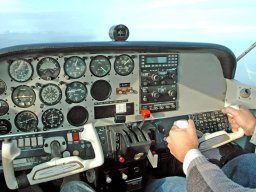
Today’s invention combines these two elements to create a laptop based, radio-control interface. As you watch the real cockpit view from the aircraft, displayed on the screen, standard flight sim controls, superimposed on the image, allow you to alter course and see the view change, almost in real-time.

Dominic_Morel_cockpit819.jpg

These days, when one fighter jet can control a small fleet of pilotless planes in parallel, the proposed system might have all sorts of military applications.

It now seems that someone has made a credible attempt at implementing the guts of this idea.

#334: Rearwords

Those warning triangles that cars are equipped with seem pretty ineffective to me.

Today’s invention provides a way for motorists in distress to communicate more effectively. When the “! Hazard !” button is pressed on the dashboard, a small projector would display a bright, single-word message on any suitable surface (eg the rear bumper of the vehicle). This would need to be large enough to be seen in time for automotive samaritans to react safely. No need for a super-clever computer-driven laser micro-projector -Something simple like a bright torch, a colour filter (to contrast the message with the car body colour) and a ‘carousel’ of word templates would suffice here.

David_Ritter_lenses808.jpg

The word could be chosen from a restricted list, including: ” Help!, Breakdown, Diall999, Doctor?, Toilet, Fuel? ” and could flash on and off, so that the movement would make the message more noticeable.

#333: Teeseeds

Golf courses seem like a blot on the landscape to me, but that’s partly because I just don’t think much of sports where people don’t break sweat and walk about smoking whilst taking part.

Today’s invention is one way for golfers to help protect the natural environment (aside from staying in the bar).

Benjamin_Earwicker_golf807.jpg

Each golf tee would be made of biodegradable material so that If it went missing, as the balls often do, at least it would eventually return to nature. Tees would also contain a selection of indigenous seeds (probably grass). Every time a tee was used, pressing a ball on top would allow a few seeds to be planted in the ground, via the hollow shaft of the tee. I’d imagine using some kind of crude valve, such as those in saccharin tablet dispensers.

This might be extended to the spikes on Golfers’ shoes (or even to the cleats on the boots of mountain walkers and ramblers, which are a source of damage to the flora on country paths).

This way, golf courses would avoid having patches of brown mud everywhere. Use tree seeds and the whole problem of golf itself would eventually disappear.

#331: Springes

There is an art to effective spring design. It can be very difficult to achieve the desired stiffness behaviour, especially when the available space is restricted and the deflection geometry hard to control.

For certain applications, it may be possible to consider using the repulsive force between magnets as an alternative to conventional springs. One such application area might be in providing people with energy return mechanisms for walking: spring heels, in other words. Various systems exist already but these tend to be complex, expensive and vulnerable to damage.

Gözde_Otman_jump779.jpg

Today’s invention is to create a number of simple, articulated hinges (of the type used to support domestic doors). Each of these would be equipped with two plates of neodymium magnetic material. It’s possible to show that for heel-sized slabs of such magnet, the repulsive force between plates with opposite polarity would peak at about 500N. The 1-degree of freedom hinge would allow the springback behaviour to be controlled.

Although the impact force of landing on a single heel can be as much as six times body weight (say 6000 N) with a couple of hinges per foot a noticeable extra springiness would be experienced during normal walkng -resulting in less fatigue for eg soldiers, police officers, shop staff and post office workers.

The springiness could be disabled temporarily, if necessary, by flapping the hinges into the fully-open position with magnetic poles at maximal distance from each other.

#330: Kidlinks

It’s well known that people can’t keep count of a collection of things, once there are more than about four of them (in a straight line).

This is a practical problem for eg primary schoolteachers who have to lead a class of youngsters on a school trip, for example. One technique which is often adopted is to encourage them to hold hands with a partner…the thinking presumably is that it is much less likely that a group of two independently minded little people will disappear without causing some kind of noticeable fuss. Hardly an approach to security which a parent would find reassuring.

BSK_children798.jpg

Today’s invention is a reflective harness of the type commonly adopted by schools but which has a clckable, child-safe catch attached to the front and rear of the waistbelt via a short lead. These can be used to attach one child to another in ‘indian file’ formation.

In order to help with safe road crossing etc, each harness could also have a clip on either side (with shorter leads). The harness on child n+1 could thus be rotated front to back so as to link with one side clip on child n, thus enabling a cross-linked two-by-two formation of tractable length (as well as linking children n-1 and n+2 etc of course).

#328: Framelock

I’m keen on bicycle design: especially features which keep machines’ handlebars in the hands of their lawful riders.

I once had a bicycle which wouldn’t fit into my van on the day we moved house, so I had to leave it behind. A small experiment saw it parked, unlocked, on a local thoroughfare to test how long it lasted before being stolen. The answer was less than one hour and this from within a forest of many other, fully-locked bikes.

Sara_Medved_bicycle789.jpg

It seems crazy to me that riders have to carry around extra legirons and chains and padlocks just to secure their steeds. Why not use the metalwork of the bike itself to help lock it up?

Today’s invention is to create a bicycle with a removable cross bar. With the bar absent, the bike is rendered unrideable, given that it would immediately bend and break. Each bar would have a large mechanical slot at one end, attaching it securely to the rest of the frame. At the other end, the bar would have an integral key mechanism, allowing only the bike’s original bar to be locked in place.

A bike owner, on leaving the machine, would detach the lightweight bar and take it with them (it would probably be used to hold the tyre pump internally, as well as a torch bulb inside one end). This would allow them to leave the bike anywhere, without needing to secure it to anything.

If you were the paranoid owner of a very expensive machine, you might choose to open the frame using the bar and lock it in place again but only after placing a telegraph pole through the triangular space.