#2204: Afterrocket

What’s better than a jet engine? A jet engine with a rocket-powered exhaust.

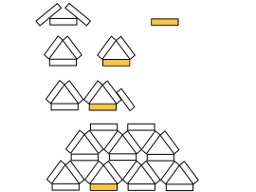
Today’s invention is a hybrid rocket motor which can rotate around a pivot (blue) so that a cylinder lined with solid fuel is injected into the outlet from the jet.

jetrocket

This unit has an entrainment collar on the front so that air is sucked in and oxidises the rocket fuel.

This could be used to generate an enormous burst of thrust to escape when, say, being chased by a missile.

#2203: LedtoUnleaded

Here’s a merry festive scenario. Drive into windswept petrol station. Queue for ten minutes to get a space at a pump. Discover that that particular one is out of the type of fuel you need.

Today’s invention attempts to overcome some of the frustration associated with having to wait and then queue again.

Krzysztof_Kozerski_pumps

Vehicles would each be fitted with a small radio transponder. This would announce your arrival to the garage, together with information about which side of your car your filler cap is on.

It would also relay data about the type of fuel required (stopping you filling with the wrong stuff). In addition, it could alert the garage to any oversize vehicles.

A light-up arrow would be attached above each side of each pump unit.

One of these would flash at each incoming vehicle indicating where best to fill up in order to minimise queue time and ensure that you draw up alongside only a working, appropriate pump.

#2202: HipFlip

I did some experimental work a long time ago in connection with replacement hip joints.

Today’s invention is an alternative design, based on placing the cup part in the head of the femur and the ball component protruding from the pelvis (as shown on the right).

hipjoint

This might be advantageous for someone whose pelvis was much more frail and in need of reinforcement than their thigh bone, for example.

It also allows more space to insert some kind of spring-and-damper mechanism within the pelvic ball.

#2201: Eyesights

I’m increasingly scared about the hellish misuse of firearms, so today’s invention attempts to limit the damage which can be done from afar by the use of telescopic sights.

Such a system would have built into it an iris-recognition device, of the type routinely used in other security applications.

Another_Outsider_eye

On purchasing the sight, it would be trained to recognise only the iris of the purchaser.

When later attached to eg a hunting rifle, the sight would only open an internal shutter, enabling its use in aiming, if the recognition software remained satisfied the the weapon was pressed to the eye of a licensed hunter.

#2200: ArMouse

I sometimes develop muscle strain when using a mouse for extended periods (ie all day).

My elbow also suffers from the effects of being pressed to a desktop as it acts as a fulcrum for the mouse-wielding hand.

Armouse

Today’s invention is therefore a mouse which sits under one’s elbow and provides a comfortable pad which also has a low friction undersurface, so that the elbow can move freely wherever it needs to.

This would have a flat arm extending across the desk with a jointed front section to which one’s favourite mouse could be clipped.

This would allow full normal wrist movement but with added support.

#2199: MagniBuyer

Many people who use supermarket trolleys suffer from poor eyesight.

At the same time, packaging is increasingly covered with information at high density…some of it small-print essential to the purchase decision.

magnifier

Today’s invention is a magnifying glass in the handle of a supermarket trolley (shown in pink). In fact the whole of the handle could be a cylindrical, perspex lens.

This would allow any package (orange) to be passed behind the handle so that minute text could be scrutinised effectively (via the red virtual image indicated).

#2198: PlayScales

I’ve written in the IOTD ebook about imagining myself small enough to fit inside a model aircraft or a Lego house.

I used to find this much easier to do as a small child than I do now.

Nathan_Ford_car

Taking up a different point of view, by projecting your mind inside small structures, is a way to spur creativity, but it’s also great fun.

Today’s invention is a theme park in which many childhood toys are scaled up to full-size, whilst still retaining all the characteristics of the toys themselves.

This might mean squeezing through the window of a matchbox car with solid doors and a one-piece, low-resolution, red plastic interior, or having tea with a lifesized Barbie in a scaled up dolls-house.

Personally, I’d be keen on Scalextric at 1:1 (would the speed scale linearly?)

#2197: Scaffoldelta

Explorers, colonists and armies are often faced with geographical barriers such as valleys, hills or lakes which must be traversed.

Today’s invention is a way to create the necessary ad-hoc viaducts quickly.

pyramid

Imagine a vehicle with tracks which rotate around its outer perimeter (just like WW1 Mk1 tanks). These would be simple, watertight boxes with motors aboard which could be controlled remotely.

The boxes would manoeuvre and ride up on each other so as to flexibly create triangles which would lock together at the corners into a rigid network structure.

A roadway or railtrack could be rolled across the upper surface to allow other, people-carrying vehicles not to be impeded by any surface features.

#2196: FlowFenders

I submitted this months ago to an open innovation ‘contest,’ but received no response from the company to which it was forwarded. I really should know better than to get involved with this kind of scam.

The problem is about preventing damage to fast moving and fragile cans on a filling line.

Alaa_Hamed_cans

Today’s invention is the insertion of extra, ‘dummy’ items intermittently into the manufacturing stream. These would take the form of closed-cell foam elements, or blanks, each designed to mimic the outer shape of a real can.

The foam blanks would be very cheap to produce and reusable over an estimated lifetime of several months. They would require almost no modification to the standard high-speed filling line (except for some extra software to identify the blanks and avoid attempting to label or fill them. There would also need to be an extra chute for occasional injection).

Each of these foam blanks would have a small weight inserted into its base in order to ensure that it remained upright. The blanks would be much less massive than a full can and therefore require almost no extra power expenditure from the manufacturing plant.

They would be impacted by cans (full or empty), undergo microscale plastic deformation and thus absorb almost all of the surplus energy within the line. This would massively reduce the damage caused to the real cans by hammering into each other.

If the line speed were simply maintained, this approach would lower the rate at which cans were produced. Since the cans would be much better protected from impacts, however, the line speed could be significantly increased so that the the production rate of real cans was maintained.

#2195: ChestVest

Body armour is heavy and inconvenient to wear, so that when someone shoots at you, it had better not be on a day when you decided to leave it at home.

Today’s invention is for anyone who has already suffered an injury requiring internal surgery.

ribcage

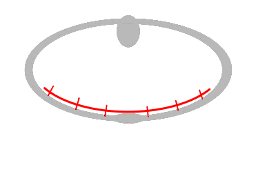
During that process, assuming an individual would be capable of returning to work or active duty, a mail or mesh made of kevlar and ceramic links can be inserted inside the body cavity so that major organs are protected (shown in red).

This would be attached to the inside surface of some ribs, leaving breathing minimally affected.

The mesh, made of biocompatible material, would be flexible enough to allow its folds to slip over one another so that mobility was also unimpaired.