#792: Tastetube

In the fancy restaurants I occasionally used to visit before I had children, sorbet would sometimes be served between courses in order to ‘clear the palate.’

I have a personal theory that If you really taste an individual food e.g. sugar, without it being masked by other tastes, your body can more easily deal with metabolising it and also decide more accurately when it’s had enough.

Today’s invention is a device for improving the taste of food, by cleaning one’s palette in between forkfuls, as well as possibly reducing the tendency to gorge (in search of a sufficiency which is disguised by a mixture of tastes).

This takes the form of a fork with an insulated handle which is loaded with a tube of sorbet before eating starts. A diner can turn a screw in the end of the fork and squeeze a small amount of sorbet onto the eating end -which can then be consumed in the usual way in between bites of the main meal.
#791: Wearther

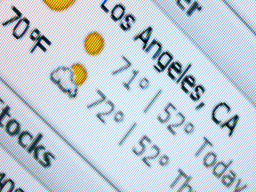
When it come right down to it, nobody looking at a weather forecast cares whether there will be light precipitation followed by a drop in pressure and an easterly gale. The question they really need answered is “What should I wear today?”

The weather forecast has been reduced to a single icon for a long time now. In the olden days of broadcast tv, representing the regional forecast as a stylised cloud symbol was probably as good as things got. Now, however, people expect a much more personalised preparation for what’s in store.

Today’s invention is an online weather forecast display in the form of images of the correct types of outer wear for the day ahead. This might be further personalised by taking into account the kinds of activities planned for the day (ie an October trip to the beach might involve taking a swimming costume as well as an overcoat).

This might even use images of clothing items from an individual’s own wardrobe to make the selection still easier.

#790: Screenslabs

Today’s invention is a way to provide people with a reminder that we are connected to even the most distant places on the planet.

A paving slab is replaced by a display screen mounted in a public space. This screen shows the view captured by a webcam pointing vertically upward, but located at exactly the opposite side of the globe.

By looking down onto the slab in London, for example, one would see the sky in a particular spot over Australia, giving the impression of being able to see straight through the Earth. During the day, Southern hemisphere stars would be visible, and at night, the floorscreen would illuminate the public space in which it was located with the bright light of someone’s else’s day.

Obviously the cameras and screens would be reciprocal, as would signs warning that walking across one wearing a kilt is probably a bad idea.

#789: Brakepoint

It is important to me to get a seat when I’m travelling by train in the rush hour. This means getting on board without having to indulge in fisticuffs and that, in turn, means that when a train stops, I need to be standing by the doors.

The trouble is that trains seem increasingly to come to a stop with a positional error of more than a few metres, so I miss the chance to park my rear end.

Today’s invention is a device, something like the toe-operated calculator described in ‘The Newtonian Casino. ‘

As a train passes me on the platform, I shine a torch at the windows of the first carriage. This torch incorporates a light sensor which allows a processor to count the number of seconds it takes for each of say three windows to pass (by noting the dark periods during which the light fails to reflect off them).

This allows a deceleration graph to be obtained and used to predict where the carriage doors will end up in relation to my current position. Before the train stops, the torch emits a directed flash which illuminates briefly a spot on the platform where the doors will stop and to which I can preemptively sprint.

#788: Tugmug

Today’s invention is a new way to use an existing product.

I usually make coffee using one of those insulated Smartcafe mugs with a filter element intended to squish the grounds down into the bottom of the cup.

The main problem with this design is that I end up with a sedimentary layer of coffee remnants which are really hard to extract from the base of the cup, once the beverage has been consumed. It also means that I have to cart about an inch of coffee grounds, right next to the liquid I’m drinking. So, why not use this device in a more effective way?

Place the filter element in the empty cup, so that it rests on the bottom. Now add the powdered coffee beans on top. After brewing, slowly withdraw the filter element, so that the grounds are carried upwards on top of it.

Extract the filter element (which might need a slightly increased tray depth) and simply tap it into the recycling bin, leaving a cupful of liquid coffee behind, ready to drink. No more scraping at the residue in the cup to make it fit for reuse.

#787: Skysigns

I was watching a huge trail of steam exiting an industrial chimney yesterday and it seemed to me that it was a wasted opportunity.

Today’s invention is a chimney system which uses the steam produced by some existing process as a kind of aerial tickertape; providing onlookers with messages ranging from a one-word weather forecast to short adverts (just like sky writing by an aeroplane but at a lower altitude).

A chimney would be equipped with a ring of anemometers each held at a radius of a couple of metres from the flue in question and placed at the main points of the compass.

A rotating manifold would be installed so that the exiting steam could be controlled, via some computer operated valves, based on the local windspeed and direction.

#786: AxisAx

I know next to nothing about guitars. Double neck guitars are similarly mystifying.

Nonetheless, today’s invention is a double neck guitar -with only one neck.

Actually, this would effectively be two guitars, with the required different properties, placed back to back and melded together.

The combined neck would need some extra reinforcement and, in order to allow the fast change between instruments which is the main reason for double necks, the strap would have a bearing at each end allowing the instrument to be rapidly spun about its longitudinal axis.

#785: Cussshhions

Designing the acoustics of auditoria is big business…partly because it’s so difficult to get right. One problem is that audience size affects the way a performance sounds. A half-empty theatre makes an event sound very different from one which is taking place in a packed house.

Today’s invention attempts to reduce this disparity.

Seats each contain a cushion which is designed to have the acoustic properties of a person. When no-one is sitting there, the cushion is in the ‘up’ position, as shown on the left.

When someone sits down, they push this cushion down, as in a normal sprung seat, and sit on the back of the ‘mannequin’.

In this way, the acoustic properties remain roughly constant, irrespective of the numbers in the audience.

#784: cHUESer

I’m always deeply skeptical about any suggested link between colourscheme and human performance.

It turns out, however, that some of this stuff is not nonsense and has actually been measured.

Proofreading will benefit from being surrounded by the colour red whilst thinking up ideas works better if one’s ambient colour is blue.

Today’s invention is therefore a plug-in for the various Office-type software suites which can detect whether one is proofreading a novel (word processor background set to red), typing in ideas (mindmapping software background set to blue), checking numerical data (spreadsheet set to red) or drawing diagrams (blue).

This, it seems, would actually improve the efficiency with which tasks like these are undertaken.

#783: KeyChain

Sometimes it’s annoying if you have a large number of keys to carry around (a certain German research student I used to know claimed that having lots of keys was a sign of personal liberty, but I resist any such suggestion (cf having a lot of guns)).

Today’s invention is to form a sprung key ring into the head of each key. This saves weight and allows keys to be arranged in a chain, or even a web, rather than acting as ‘petals’ on a central ring (which can make finding the right key, let alone turning it, rather difficult).