#2254: TapeTracks

Tracked vehicles which suffer damage to their undercarriages can be left stranded in perilous situations.

Today’s invention is a backup mechanism for such scenarios.

trackfeed

The vehicle would be fitted with armoured roadwheels, each of which would accommodate perhaps a dozen snail-shell ‘magazines’ holding a rolled up, spring-steel tape.

These snailshells would be fitted inside the roadwheel radially, so that when crossing soft ground, the strip inside each could be driven outwards by a small internal motor.

This would provide continuously-variable ground pressure to allow fast movement on roads (tapes withdrawn) or steady progress over bogs (strips fully extended).

In the event of damage by eg mines to some of the strips, they could simply be extended to offer restored traction.

#2253: SpaceSheet

Astronauts, I’m told, have real difficulty in adapting to sleeping in space.

Microgravity means that they need to strap themselves in and often find their arms floating freely when they wake up.

fluxbed

Today’s invention is a blanket for astronauts which has a matrix of small but strong magnets embedded in its outer surface.

These are attracted to a steel bedboard so that the astronaut can feel some simulated blanket weight and thus fall asleep more easily.

Weaker magnets embedded in velcro straps would provide similar restraints for the hands.

#2252: Subooster

Many navies are engaged in building a new generation of electrically powered ships. These have many advantages such as numerous, dispersed drive units.

Today’s invention is a new form of drive unit for large ships.

Subooster

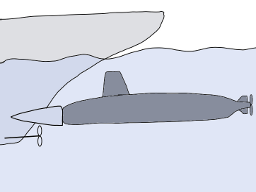
Such vessels, eg aircraft carriers, would be fitted with a special underwater docking mechanism to which a nuclear submarine (or two) could attach themselves.

This would happen only if the carrier needed to get somewhere at twice its normal speed, since it renders the submarine more vulnerable than normal.

Since these subs have enormous potential power outputs, they could add their propulsive force to that of a carrier, without a correspondingly large increase in combined drag.

#2251: WingSpam

Aerial robots (uavs, drones) are appearing everywhere.

These range in size from the insectoid to those bigger than a light aircraft. Today’s invention is an underwing module for one of these huge automata.

mandrone

This consists of a pod which could comfortably contain a person, enabling someone with special skills, but no flying knowledge, to be taken to or collected from a remote location.

The uav would be flown by a distant, ground-based pilot, as usual, but they could minimise any risk by limiting the number of airborne people to one.

Such a module could also be used to accommodate a human observer when tv imagery is insufficiently clear or smooth. It might even have room for a parachute so that the occupant could make a quiet descent, if engaged in some covert operation.

#2250: StreetScraper

Today’s invention is a mobile skyscraper.

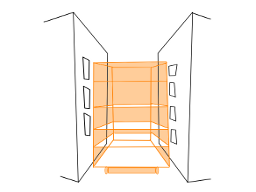
Actually it would be a metal frame tower on rollers. This would be designed to fit within the width eg of Manhattan’s long, north-south avenues.

wallscraper

A small number of such mobile towers would move up and down each avenue, supported on rollers near the sidewalks and leaving a tunnel open on their ground floor so that traffic could pass through unimpeded.

The upper decks would have gangways which would move inwards and outwards automatically to allow access for the inhabitants of conventional skycrapers as the frame towers slowly passed.

These towers would enable people to walk across the street from building to building, without going to street level.

They would also accommodate meeting spaces, retail and recreational facilities (such as gyms).

This would offer comparatively cheap, extra space in cramped environments, but without closing roads or permanently damaging the character of these cities.

#2249: Y-knot

Tangled earbud cords are a pain and I’ve suggested several remedies before.

Today’s invention is another. It takes the form of a very thin, Y-shaped balloon to which the cables would be bonded.

blowbuds

When you extract your tangled cables from your pocket, to greatly lessen the untangling problem, simply blow in the open end of the Y balloon and the internal pressure will fix everything except tight knots.

#2248: Oscillasign

It is rather amazing that the human visual system is hyper-sensitive to motion and yet can still read text which is moving about randomly.

As urban areas become a forest of roadsigns, today’s invention makes use of our motion detectors to help drivers pay attention to high priority signs.

buzzsign

Roadsigns which were deemed particularly important would be mounted on stiff springs.

As traffic passed and breezes blew, these signs would oscillate enough to boost attendance to them but not so much as to impair recognition of their content.

It’s only a matter of time before the advertising industry takes advantage of this idea.

#2247: ParkPump

I’ve been watching the construction of a major new building in Glasgow over recent weeks.

One of the crazy aspects of this process is that they use an enormous and costly pump to raise concrete to the upper floors.

cementlift

Today’s invention is a simple alternative for low flowrates of concrete.

A simple calculation shows that it would be possible to raise liquid concrete to about 100m, using only the weight of the mixer lorry itself.

This would have to be driven onto a hinged ramp under which would be a piston with cross-sectional area of about 100cm^2.

Valves would be needed of course to coordinate the inflow at the bottom and the small bursts of outflow to the upper storeys.

#2246: Burstoroid

A burst tyre is something to be avoided. In particular a tyre which shreds when an aircraft lands or a lorry passes over some sharp ironwork can have catastrophic consequences.

Today’s invention is therefore a simple backup.

backupwheel

A vehicle with many wheels would have some subset of its tyres constructed in the following way.

These tyres would have a solid inner tyre moulded into them during manufacture.

When the outer rubber surface is damaged and deflation occurs, this inner tyre would contact the ground as the outer fragments were torn away.

This would allow control to be maintained until the vehicle could be brought to a stop.

Although this would add a small weight penalty, the improvement in safety would be significant.

#2245: Streamstile

The dynamics of crowds always fascinate me. I’m particularly keen on smoothing people flows, as you might streamline or laminarise the movement of a fluid.

Today’s invention attempts to provide a solution to one of the main problems of ticket barriers.

barrierspeed

People walk up to existing barriers, stop, insert ticket, wait, receive ticket and plunge through the open gate.

If the barrier dislikes their ticket, the process is further complicated by the need for the person to collect it and reverse into the face of the oncoming masses.

Instead, imagine a barrier of the type shown. A person (dark blue) puts the edge of their ticket in an open slot (with the gate in the closed, turquoise position).

They must walk smoothly forwards as the machine reads their ticket, never letting it go.

Reaching the red location, the barrier decides to move the gate to the open (pink) position or to keep it closed.

In this event, the person still clutching their ticket is directed around a U-turn into a space between queueing passengers (rather than bumping into them). They can then seek assistance from an attendant in the usual way.

This eliminates all the stopping and reversals associated with normal barriers.

Although there would be fewer outlets, the increased speed of egress would more than compensate for this, and thus boost net flowrates of passengers.