#2292: Concushion

Concussion is no joke. Repeated concussions are believed to cause cumulative damage, leading to mental problems for a range of different athletes.

Among those at risk are American Football players.

diane_gibbs_football_game

Many attempts are being made to lessen the problem by redesigning helmets.

Today’s invention approaches the issue from a different direction.

Players would have a uniform limit set on their momentum. This would be achieved by fitting boots with studs in the shape of overgrown ballpoint pen nibs.

Accelerometers in the boots would detect someone’s change in speed during a play. Once their momentum reached the limit, the balls in their studs would be forced outwards, allowing the balls to roll against the astroturf and causing them to lose some traction.

The heaviest linemen and linebackers would thus have a speed limit imposed on them that was much lower than the lighter, faster players.

This would stop them from colliding with players with momentum sufficient to cause even small-scale brain damage.
#2291: DodgeCity

I’ve been thinking a great deal about asteroid impact.

The probability of an earth-destroying impact is very tiny…and there is nothing that can be done about them anyway -beyond having a global lottery for places on the last Virgin Galactic flight.

dodgecity

The most significant opportunity to outlive an asteroid impact is surely to deal with the problem of medium-sized bodies hammering into a major city.

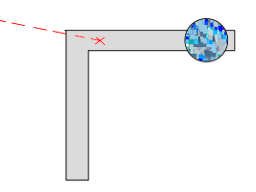
Today’s invention is therefore an asteroid-proof metropolis.

Build a city on a wheeled platform which is free to move on a special set of orthogonal railway lines, as shown (we already create whole airports on roller bearings, in areas of earthquake activity).

A few hours before being struck, a city of this type could be powered out of the predicted line of fire. There would be significant damage to the surrounding landscape, but the city itself would avoid catastrophe.

#2290: Raciators

Racing car design is faced with the problem of how to optimise the balances between eg drag, downforce and heat transfer.

F1 radiators in particular have to achieve enormous through-flow whilst also dealing with all sorts of refuse which finds its way onto the track. Pit crews extract huge amounts of litter, but that can only happen after many laps during which it will have greatly impaired engine efficiency.

radiators

The F1 rules on radiator design seem to be pretty non-specific. Today’s invention attempts to exploit that.

Radiator panels would be mounted on rotary seals, allowing them to be rotated during a race.

At locations where engine loading was decreasing, they could be flicked from forward-facing into inline configuration. This would shed a large proportion of the refuse and briefly reduce drag as well.

Waggling the radiators on the starting grid could be used to lower the engine temperature -especially at tropical grand-prix.

#2289: GlidEjection

Fighter planes have had ejectable crew modules before.

Today’s invention is variant on that theme. A plane with a very low-weight front end, including canard wings (orange), is shown in the lower image.

glideject

Should the crew need to leave in a hurry, a secondary wing, which is stowed under the long axis of the fuselage, is rotated about its central axis.

This allows the pilot to pull the nose up a little and detach the crew module in the form of a small glider (upper image). This uses only aerodynamic forces, keeps the crew together and maintains pilot control.

Not only does this cause less injury to crew members than normal ejection but it also gives them some hope of gliding back home -or at least to a safer location.

#2288: Stillwater

When I’m running longish distances I like to carry water.

There are several problems associated with lugging a bladder-type system…mostly to do with the perpetual taste of plastic and the difficulty of cleaning the damn thing out.

Stillwater

I prefer bottles, but these thrash about asymmetrically and get in the way, even if I run economically (which I usually don’t).

Today’s invention is a belt which has a set of bottles attached. Each ‘bottle’ is effectively a wide hip flask which has notches in which other flasks can slide up and down.

Each flask rests on a spring so that as liquid is drunk from any one it maintains the position of its centre of mass. The centre of mass of the whole system therefore stays nearly in the same position throughout a distance event.

There are only two flasks shown in the figure, one with red liquid and one with blue. The multiflask approach allows a runner to carry several different types of liquid for different stages of a marathon for example. It also lessens the tendency to generate large wave motion inside a single vessel.

#2287: StoreFloor

Shopping in bricks-and-mortar supermarkets sometimes drives me crazy.

The layout of produce is determined by some central office guru, with degrees in marketing psychology, who wants you to see beer after you just bought peanuts…so these unrelated products will be placed adjacent to one another.

ilker_store_map

Today’s invention is therefore a new way to lay out products in a store, which will educate consumers and remain static over time.

The floor would have a scale map of the world painted on it.

Products’ shelves would be placed at the locations of their country of origin.

If you want an authentic Mexican meal or to dine as a locavore, this approach would help you out.

It would also allow people some sense of exploration and to ask questions about how produce from country X is cheaper than from their own local farms.

#2286: LapMap

Racing drivers already have a lot of information to cope with. Learning the many circuits adds to the burden, especially for neophytes to the business.

Today’s invention is an attempt to make the process of anticipation easier for rookie drivers.

lapmap

During testing on a particular circuit, some laps would be driven with the normal wheel replaced by a wheel-sized map of the track created as a 2D steel shape.

This would have a simple linear display inset into its front surface.

Lights would indicate the current position of the driver’s car, as well as the nearest few others -both behind and in front.

This would allow a driver as he turned the wheel to physically learn the circuit and anticipate which curves were coming up next more effectively.

It would also allow the occurrence of any accident to be indicated, thus improving track safety.

#2285: Vaculoo

I heard a particularly graphic description yesterday, by a medic, of the mechanisms by which norovirus transmits itself between people.

Suffice to say that any form of use of a lavatory when you have the bug creates aerosol particles, from which others can be infected (if the queen can get it, then we are all at risk).

vaculoo

In a normal bathroom, the fan which it may contain will actually tend to suck bugs into the room. Today’s invention is therefore a fan unit which fits inside lavatory bowls.

A set of small apertures suck any spray into an exhaust tube before it can be breathed in.

This might be especially valuable in hospitals and could be activated whenever the lid was raised (thus acting as an extra signal to lower the seat, post normal use).

It should also keep the bathroom smelling a bit fresher too.

#2284: SpringLimb

Today’s invention is an alternative prosthetic limb attachment.

A user would have ferrous discs screwed into the bone of the affected limb (red). The tissue would heal over, lessening the risk of infection, when compared eg to titanium rods which protrude through the skin.

limblinks

A close fitting ‘boot’ would encase the stump…but much less tightly than conventional equipment which often restricts air movement to the skin.

The boot would be slipped on over the stump. A motorised screw device would then be used to insert these magnets (blue) into locations in the boot walls, under control to avoid bruising.

In use, the stump would be held firmly in an equilibruim position.

A small amount of springy, vertical movement provided by the magnetic field would add to the comfort of wearing it.

InventorMentoring

I’ve begun selling a new online service, InventorMentoring.

For a modest fee, I’m running one-to-one support sessions for Designers, Inventors, Students, Makers…anyone with a serious interest in making money from their ideas.

It’s all completely confidential and there is no obligation on anyone (other than honesty).

So, get in touch today, or pass the link above to someone who would benefit from my (several decades’) experience.

Cheers,
Patrick