#2361: TwoPlusOne

Manufacturers still make sports cars with two absurdly small seats in the back.

Today’s invention is an alternative.

twoplusone

Such cars would have an aftermarket module available containing one, adult-sized seat and designed to drop into the vehicle, facing sideways, as shown.

This would contain several airbags, so that the travelling position need not pose an extra risk in an accident.

#2360: Gravitether

Astronauts currently have a number of exercise devices to which they strap themselves and undertake resistance training.

If we are serious about sending people to Mars, we need to think much more about how to counteract the physical effects of low gravity.

gravitether

Today’s invention is to design a long-range spacecraft around the idea of a permanently simulated gravitational field…at least for people.

Each of the Mars-bound travelers would wear an aluminium exoskeleton, sewn into their overalls.

This would have a belt attached to a strap which could slide along, a groove in the floor -under a tension equal to the wearer’s Earth weight.

The exoskeleton joints would all be capable of detecting their orientation and when a limb moved ‘upwards’, the joint would resist that motion more than when moving downwards.

This results in a more normal environment and maintains fitness via ambient exercise of the muscles.

#2359: Cataract

Today’s invention is intended to contribute to road safety.

If, for example, occupants of a vehicle have not put on their seatbelts when the engine is started, a beefed-up windscreen washer spray operates, whilst disabling the wipers.

Helmut_Gevert_raindrops

Water is sprayed from the top edge of the screen and collected in a trough at the bottom…so that the water for this purpose never runs out.

The screen is thus impossible to see through and stops anyone driving away until the belts are properly attached.

A modified version of this approach would spray just enough water on the screen to force the driver to slow down greatly or stop, even with the wipers operating.

This might be deployed if a camera in the driver’s headrest spotted unfamiliar alphanumerics or other graphics in its image, which would be indicative of either texting or reading whilst driving.

#2358: LeverLoader

When you load the panniers of your bike before a long trip, it’s difficult to ensure that the weight is equally distributed.

This is also important, so that the machine is safely rideable.

balancebags

Today’s invention is a balance for the parcel rack on a bicycle.

This has a fulcrum and a lever arm.

The panniers can be filled and the arm slid from one side towards the other until the bags exert equal turning effects clockwise and anticlockwise.

The arm is then locked in place before cycling off.

#2357: Shinshaver

People expend a lot of effort in removing hair from their legs. I’m not sure why they do, but I notice that my running tights are effective shavers…at least where the material rubs the legs.

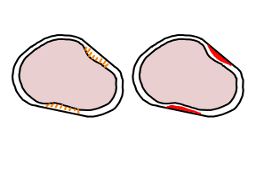
In the left diagram, a section through a runner’s calf is shown.

legshave

Ginger hair is left in the concavities of the calf muscle and the shin.

On the right, a pair of running tights is shown with extra, internal padding at these locations.

The natural running motion allows these to do a good job of smoothing anyone’s lower limbs.

#2356: SleepSlope

When I travel on planes or trains, the range of stable seating positions is very limited.

This means that it’s hard to sit comfortably, let alone fall asleep.

sitframe

Today’s invention is for restive and ill-fitting passengers such as me.

It takes the form of a padded loop wrapped around a variable-geometry frame, the legs of which curve around so that they can be pinned in position by one’s thighs.

This allows a passenger to select a number of comfortable, forward-leaning positions in the course of a long journey.

#2355: Roomzzz

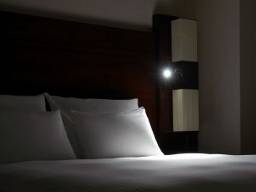
Today’s invention is a SeatGuru for hotel rooms.

Since most ‘cheap’ hotel chains have internal layouts that are almost identical, when booking a room, it would help determine the relative noisiness of different room numbers.

Lars_Jensen_bed

These data could be based on crowdsourced feedback, from previous guests, as well as a model which would include the (weighted) effects of eg proximity to the lift, firedoor, ice machine, family rooms, kitchen etc.

This invention was inspired by a conversation my wife had with discerning traveller Steve Cook.

#2354: VacValves

When vacuum cleaning, the carpet tool often runs across parts of the floor which stand proud of others (eg when mats are encountered).

This allows an inrush of air which avoids the carpet or rug which you actually want to drive air through (Some systems have a fringe of bristles, but this never forms a good seal).

vacuumvalves

Today’s invention is a cleaner head with a series of sprung valves. Each valve could have a roller ball in the end to avoid damaging one’s floors.

These valves are normally sealed until the head is pressed down so that those in contact with the floor or rug are forced open.

This allows air to be directed preferentially via the surface you want cleaned.

#2353: Fingarray

Today’s invention is a new form of glove for use in eg isolation cabinets or in spacesuits.

As well as a set of conventional mittens, for moving large loads with low precision, one’s suit would allow the hands to be withdrawn and the fingertips inserted into a kind of two-dimensional sea anemone surface within the suit.

monoglove

This would be both transparent and highly flexible and used only for exerting tiny forces with ultra high dexterity. Each of the glove’s fingers would be prevented from swelling due to the pressure differential by a loose weave of fibres embedded within the material, but avoiding the pads of the fingers.

Only one’s fingertips need be inserted and these would have many possible options in terms of their optimal placement for the task at hand.

This arrangement would cause much less damage to a user’s fingernails and allow long periods of fiddly work to be undertaken with comparatively low stress.

#2352: SlipShip

Apparently more than 2.5 cruise ships become grounded every year on average.

The cost in terms of tugboats and prestige must be enormous (Nearly as much as when the toilets all block up).

Slipway

Today’s invention is a simple addition to cruise ships to help them get out of these difficulties -whilst minimising the negative publicity.

A streamlined sledge is strapped to to the bottom of the hull. This contains a bank of sprung rollers, so that when the ship hits the bottom, the impact is less obvious to those on board.

Once stuck, the ties on deck are released and the engines thrown into reverse so that the vessel relaunches itself, leaving the sledge with a buoy attached so as to enable its later recovery.