#323: Flatpack finery

Velcro is commonly employed as a secure closure method for the front flaps, pockets and wrists of eg parkas. It could just as easily be used, however, to form all seams in clothing. This would allow clothes to conform, much more commonly, to the claim ‘one size fits all.’

It would mean that a much smaller range of flat panels of different sizes could be supplied to consumers. They would be able to be assembled into a well-fitting wardrobe of garments by joining the panels together, once they had been wrapped around the owner’s body.

Alicia_Mitchell_denim778.jpg

For those people who find themselves challenged by eg assembling flatpack furniture, the velcro strips could be made of patches of hooks and loops of differing sizes, allowing only the correctly corresponding seams to be aligned and joined.

Another benefit is that these flat panels could be much more easily stored and maintained than current, preassembled, 3-D outfits. There is also scope for joining panels of contrasting colours in order to make more personalised, patchwork suits.

Want to get undressed in a hurry? Grab a panel and pull. Stained your favourite jacket? Simply tear out the panel in question and dry clean that one alone. Feeling the cold or need extra abrasion resistance? Just Velcro some extra panels into place.
#322: Signal signing

The poor old signature is running out of steam as a guarantee of identity in this digital era.

The shape of a signature alone is very easy to fake, given just limited amounts of practice. Those systems which still use signatures tend to monitor the dynamics of how the letters are formed just as much as the final image…and this requires cameras, touchscreens, accelerometers and who knows what else in terms of computing.

carl_dwyer_signature747.jpg

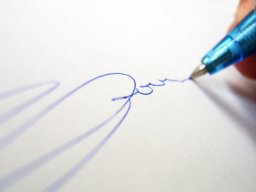
Today’s invention is a ballpoint pen which writes, as normal, on any old piece of paper but which whose output incorporates biometric information about the dynamics of the writer’s hand.

Think about writing with a tube of stripey toothpaste, except that the stripes are of different colours (or consist of dots and dashes with different mark/space frequencies). Scale this idea down a little and you have a pen which will output different ink composition, from millisecond to millisecond, dependent upon the direction of movement of the ball relative to the barrel. (Obviously, the pen would need to be held consistently -perhaps by moulding in fingerpads into the outside of the pen itself).

This could be detected (coarsely) using only a magifying glass and would reduce any doubt about the ownership of a signature or even of an author’s manuscript. In particular, a computer loaded with statistical directional characteristics of one’s writing could generate a phrase (in black and white text) for a signatory to copy and have analysed to confirm their claims.

#321: Formula flow

People who design spreadsheets tend to think in straight lines. This makes life easy when undertaking the programming (which is pretty difficult, evidently), but it creates some additional headaches when the data are displayed.

I recently had to decipher the details of a spreadsheet written by someone else. It was a complicated multipage affair with a huge number of complex formulae on board. Usually, making use of an inbuilt feature, such as ‘trace dependents,’ would be enough to see the underlying structure of the data. When data and formulae lie in the same rows or columns, however, all the arrows lie on top of each other and it becomes impenetrable.

Andre_Veron_sheet770.jpg

Today’s invention is a two-fold improvement.

1. Replace the straight-line arrows with arcs. The radius of the arc linking two cells could be in proportion to the distance between cells. This would greatly reduce the degree to which arrows overlap and thus allow the relationships to be more apparent.

2. Introduce a step-through function in which cells are visited one by one, starting from some chosen location. At each cell, the precedents and dependents are drawn in (using two different colours and the curves described above). The speed with which this ‘movie’ is displayed would be variable, allowing a ‘dependency flow pattern’ to be perceived.

#320: Charitable feedback

Charities are now big business, like it or not. One in particular, that is supposed to be caring for children, spends a fortune, I happen to know, on company BMWs for its ‘Executives’.

Even the most prudent, well-managed charities. however, have to think up ways to help support their causes by encouraging donations of cold, hard cash.

James_White_charity447.jpg

Have you seen one of those spherical collection devices that take in a coin which then rolls down a curved internal surface in a very graceful trajectory? -thus encouraging people to donate again, just to experience the dynamics. On a similar vein, today’s invention is a voicebox for collecting boxes.

When coins are inserted, the system would issue a Thank You message, voiced by eg the celebrity patron of the charity in question. The greater the amount given, the more effusive the message would be. There could even be a credit card based system, which would encourage people to type in the amount of their donation, show a short film of ongoing projects and give a personalised message of appreciation (based on the name on the card).

Donors’ names might even be listed scrolling across a screen on the machine.

#319: Spot filler

Each eye has a ‘blind’ area containing no photoreceptors, where the optic nerve connects to the retina.

Even for people with two working eyes, it’s perfectly possible to be unaware of small objects when their images fall into retinal blindspots. Normally such an image will correspond with only one eye’s blindspot, leaving the other eye clear to see it.

Robert_Elliott_lens766.jpg

If one eye is, however, obstructed by a door pillar, and the image of the object in question falls within the other blindspot, it simply won’t be seen.

This is true of objects as big as 16 full moons: potentially very bad news if it’s a motorcycle or a pedestrian on a crossing.

Today’s invention is a pair of contact lenses which contain only a small refractive region aligned with the blindspot in each eye. This forms a tiny diverging lens which bends light, which would fall into the blind region, outwards onto the light receptors at its edge.

The brain is good at joining up such signals without creating any perceptual gap (on closing one eye, you aren’t aware of a blank space in your other eye’s visual field). This would prevent all but the tiniest objects disappearing and enhance safety in numerous contexts… from driving to sports to piloting aircraft.

#318: Voiceball

I attended a lecture the other day in which members of the audience were invited to ask questions. Several of them did so before the woman who was walking around with the wireless mic had a chance to reach them.

This was a ridiculous situation and it made me think that there must be a better approach. Even if each lecture theatres can’t be equipped with many such microphones, surely having someone physically carry one from place to place is the equivalent of having a man walk in front of your car carrying a red flag.

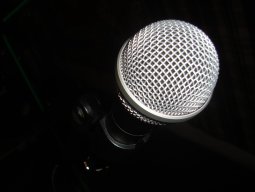
Csaba_Szilvási_mic764.jpg

Today’s invention is a small wireless microphone embedded in a foam rubber ball. Audience members can then simply pass the mic around by throwing it to one another. This introduces an extra element of fun into ‘audience participation’.

This might work rather well in certain boardrooms where the rooms themselves are huge and the board members ill-disciplined enough to just talk without being invited to by the chairman. Such a microphone therefore imposes a certain order on proceedings, but without the legwork and delays associated with passing the device from hand to hand.

#317: Thematic ads

It’s great that services like Google’s Adsense are available to to place ads on websites without owners having to expend very much effort. It drives me crazy, however, that those sites which have a wide variety of content from day to day (such as this one) tend to have adverts which are anything but appropriate to the visitors who read the material.

The service allows you to choose particular ads or to choose to exclude particular ones, but that’s about the limit of one’s control.

Telly_Tan_click762.jpg

Today’s invention is an alternative to the rather naive, text-based algorithms which may serve appropriate ads if your website is always all about eg wiring looms or some other specialist subject.

Instead, anyone who wanted ads automatically served to their site would simply complete an online form, using tick-boxes to specify the interests of their visitors, rather than any single element of the content. The form might need to have a multilevel tree structure, but it seems perfectly do-able.

That way, IOTD visitors (with a presumed fondness for ideas, invention, creativity and design) wouldn’t be confronted by idiotic invitations to ‘meet military singles’ and opportunities to rent drinks vending machines or holiday in St Andrews.

#316: Stapless

I have alow opinion of conventional wire staples…they usually fail to penetrate the massive volume of paper I confront them with and then they tend to empale one’s fingers when trying to separate the paperwork later.

It seems that $10 or so buys you an alternative these days…a way to join paper by punching a tag (of paper) through several other sheets. The trouble is that this really only works for a very small number of pages.

corner_cut759.jpg

Today’s invention is a way to join arbitrarily large numbers of sheets of paper but without the need for wires. It is based on an electrically driven desktop drill. As shown in the diagram, on the left, the pile of papers to be stapled is loosely bent around a bisector of one corner and slightly separated into two roughly equal sections. The hole cutting drill operates once, at the location indicated by the “+” to create one set of sheets with a tang in the corner and another set containing a hole.

As indicated in the right hand part of the diagram, the tang can be inserted in the hole, joining both sets of paper. Several drilling operations in one corner could be used to create tangs at opposite angles for a more robust joint.

#315: Igloop

People can find themselves suddenly without a roof over their heads because of eg war or some natural disaster. Maybe the following automated building tool would help.

A small, autonomous robotic truck would be capable of moving only in circular arcs (of fixed length). Placed on a field, it moves backwards, along a circular arc and scoops up some earth. It then moves forwards and, injecting small quantities of water, it exudes a stream of mud paste along the arc. This backwards and forwards motion continues forming a spiral which overlaps itself (with gradual decrease in arc radius) until a hemispherical ‘igloo’ has been constructed -a little like a wasp’s nest).

Karla_Portch_clay758.jpg

For people who may be too weak to build their own shelter, this ultra-simple machine would be able to deliver a large number of rudimentary dwellings, working 24 hours per day.

If you required some extra headroom, the truck could, at some point, cut through the wall of the hut and excavate earth in circular arcs from the floor inside.

Since writing this, I have come across this recent development.

#314: Keymound

I’ve been sifting through some crazy patents lately. It’s hard to believe quite how many have been granted in connection with the humble keyboard.

There are keyboards with keys whose size corresponds to their frequency of use, inflatable and self-illuminating keyboards, radio-controlled ones and even some made of chocolate etc, etc.

Bjarne_Henning_Kvaale_wall756.jpg

I’ve noticed that those of us who type a lot, and are wary of carpal tunnel syndrome, tend to have their keys arranged in a well-defined ergonomic ‘mound’. People who do most of their work on a laptop are not so well catered to, however.

Today’s invention is an ergonomic keyboard for laptops, consisting of keys the individual height of which can be set. This would allow you to experiment with having eg the most frequently used keys standing up more than those less used ones. More practically, it would allow the formation of an ergonomic mound arrangement.

On opening the laptop, each key would be driven, by a small spring, to the comfortable working height determined for it by the user.

Once the work was complete, the screen would simply push the mound flat, as the laptop was closed up in the usual way.