#383: Weightbelt

Musculoskeletal problems often arise in people who carry heavy items about -especially if the loads are distributed asymmetrically. Classic examples are children carrying a schoolbag crammed with books (and mobile electronics) on a single shoulder and the accountant with a box case full of papers -gripped in one hand. (Actually it’s more likely to contain cash, for which complaint I have less sympathy).

Today’s invention is a new way to enable people to carry such loads more easily.
handle946.jpg

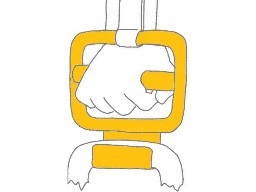
This consists of a pair of lightweight plastic handles connected by a webbing strap. A large weight can be held by the hook beneath one handle. This is then supported by the nearer hand, in the usual way (fingers fatigue under load, without other backup).

The strap allows the weight to be also spread across the shoulders and the distal hand, which can press down with elbow locked, to help support the load.
#382: Finz

Today’s invention is a simple way to reduce the heat lost by your gloved fingers by about a third.

It also allows me to indulge my limitless admiration for the zip fastener (again).

Andre_Veron_zip944.jpg

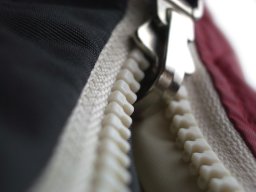
Each adjacent pair of glove fingers has a zip on the outer surface between them, which can be used to join the fingers together; reducing their area and heat loss.

This also allows e.g. the index finger to be separated occasionally for increased dexterity…just as long as that doesn’t involve something so stupid as operating a trigger.

#381: Verretas

I’ve just been reading in some magazine for high flying corporate execs about the design of wineglasses (before anyone thinks I’ve got a subscription, I should say I was reading it in a waiting room).

I’m really not sure how true any of this stuff actually is because after a glass or two of Pinot, the focus required to conduct rigorous tests obviously becomes less acute.

Steve_Woods_glasses942.jpg

Anyway, the thinking in wine buff circles is that the shape of a glass affects the taste …by as much as £10 a bottle (ie three times what I pay for a bottle).

This occurs, they say, due to the contact the glass creates between wine and air and because of where in the mouth the glass directs the wine. See e.g. this item on ‘stemware’.

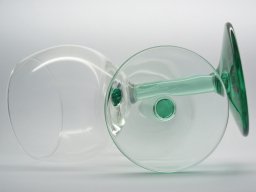
Today’s invention is an attempt to optimise the second (and presumably dominant, effect). This takes the form of an insert which clips to the side of any ordinary wineglass and which holds several plastic drinking straws. The straws then pass, in a tight bundle, through a mouthpiece which forms a seal with the tippler’s lips.

Each of the straws can be extended and rotated within the mouthpiece so as to be pointed at the parts of a drinker’s mouth which are thought to optimise the experience for each particular wine.

Small printed tongue icons, indicating the best straw positions for each wine would be provided (ideally on the rear of the bottle’s label).

#380: Sailing zips

Windpower is a pretty poor source of energy (at least over most of the Earth’s surface and in the absence of a government subsidy). It does, however, provide an effective way to distribute goods around by sea. Now the use of sailing ships is being widely revisited for this purpose.

Conventional sails require to be hoisted and lowered in order to maximise propulsion, and avoid damaging the ship to which they are attached. This is a laborious process, even if the hoisting is undertaken mechanically.

Carli_Donsky_sailing940.jpg

Today’s invention is a set of fixed sails on a large sailing transport ship. The sails stay in position, irrespective of wind condition. Each of these has a series of long, linear cuts made in it. The cuts can be opened or closed using large, robust zip fasteners.

These zips can be driven by computer-controlled winches to different positions in order to tune the drag of the sails and optimise their response to the wind.

#379: Opinionbin

Manufacturers usually have to wait for their sales figures to appear before they can detect the success, or otherwise, of some product line.

Today’s invention allows information about the satisfaction of large numbers of real customers to be gathered. This aspect of marketing is sometimes forgotten in the rush to move on to the next shiny product…but what customers think post ownership is increasingly important in the race to build brands.

It consists of a waste bin equipped with a cameraphone. Items of packaging which were just about to be thrown away are briefly passed in front of the phone’s camera which can image their barcodes and allow the soon-to-be-former owner to express their satisfaction with their purchase in a variety of different ways (depending on how much time they have available and how incandescent with rage they have become).

Zdeslav_Schreiber_bin918.jpg

These expressions could start at the level of scrolling to click a happy or sad icon (a little like the wall units found in motorway toilets). It would also be possible to provide more information, if the user desired, about eg how easy the product had been to open or use and about the value obtained.

This would then all be communicated back to head office via the normal cellphone system. A server would interpret the barcode image and link the code to details of the product.

#378: Salient web

Whilst we wait for the arrival of the semantic web, it seems to me that search engines are not performing nearly as well as they might. When a web crawler examines a website, it can only form a very rudimentary view of what the important content actually is.

Today’s invention is a user generated salience measure.

melanie_kuipers_index928.jpg

Each time a webpage is loaded into a browser, a visitor would be asked, with a certain probability, whether they wanted to answer questions about the page (in return for entry into e.g. a prize draw).

If the response were positive, a user would be invited to click, in order, the five most important parts of the page (or the five most annoying ones).

These data would be stored over time, suitably encoded within the page itself. This would allow the possibility of automatically reconfiguring both the nature and structure of the content.

More importantly, the stored information would be read by crawlers visiting the page and used to help index its content more effectively (by weighting the words in the index according to the significance accorded them by users).

#377: Stripseats

It’s ridiculous really that people who have paid for tickets on public transport don’t get to sit down (especially on long journeys).

Today’s invention offers an alternative in the form of flexible plastic seats like those which sometimes appear in playparks by way of replacements for traditional heavy wooden ones.

jonathan_malm_swing934.jpg

There are almost always handholds on the shoulders of seats bordering the aisle in a bus or train. Using these, to each seat on one side of the aisle would be attached permanently a flexible, rubberised seat/strap unit, so that it hangs down beside the seat when not in use.

Once the seats fill up, rather than have to stand, people can grab the free end of the seat and attach it to the handhold on the seat on the opposite side of the aisle. This would be achieved using a robust, easy to use clip…which would support a passenger’s weight but disconnect easily when flicked upward (e.g. when evacuation is suddenly needed).

This arrangement would be no less safe, in the event of say a fire, than having to fight one’s way past numbers of standing passengers. Sitting down might well result in fewer injuries when some kind of collision occurs.

#376: Sidelongs

It’s widely believed that the (unusual) whites of people’s eyes may have evolved to enable other humans to work out what is being stared at. Meaningful glances can sometimes be socially instructive and much less overt than blurting out “Look at that!”

For anyone who needs to avoid people knowing exactly where they are looking, however, today’s invention aims to help; based on the above information.

eye.931png

A pair of contact lenses, one all-white, one with a fake iris and pupil, are overlapped, joined and placed in one eye.

The white lens covers and obscures the natural iris but can still be seen through (as can the other, false iris). This arrangement gives the impression that the wearer is looking eg left, when in fact she’s looking straight ahead.

This could be useful to security staff and surveillance agents who want to monitor suspects covertly. Obviously both eyes’ lenses need to be similarly orientated to avoid drawing attention to an unnatural squint.

#375: Readerbot

Young children seem to develop a strong attachment to certain storybooks.

It’s great to be able to calm them down at bedtime with a reassuringly familiar tale…although as a parent, reading the same book fifteen nights in a row (without being allowed to introduce any interesting characterisations to the narrative) can become a chore.

reading_hortongrou925.jpg

Today’s invention is a book cover which contains a small microphone and enough digital storage to record a version of every book in the house, being read by every grown-up family member.

The child recipients of these stories should still get cuddled during each performance, but parents can glaze over at the end of a hard day without having to actually say the words (again).

This would work particularly well as a memento of grandparents, after they are no longer around.

#374: Clearcuff

I find it maddening that when I want to consult my wristwatch, I have to hoist my shirt cuff out of the way.

For people who insist on wearing a chunky watch, it must be a burden to scrape the material across its surface numerous times a day. Add French cuffs and a pair of links and you can forget any attempt at chronometry.

Barry_Smith_watch923.jpg

Today’s invention is a straightforward solution. Shirts would be equipped with a small window in their left cuff, allowing the watch face to be conveniently viewed -without all the usual contortions.