#393: SatelliteDial

I won’t get started on what’s wrong with TV…but it seems to me that satellite TV is even worse, consisting as it does of lots of the content that got rejected from the mediocre terrestrial portfolio. Not only that, but satellite dishes really don’t add much to the aesthetic appeal of houses to which they get attached (I was recently shocked to find one lurking on the back face of my chimney, left there by a previous owner with a subscription to Sky Sports -I know this because I continue to get post advertising all their ‘great new packages.’)

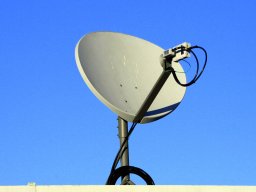
Anyway, today’s invention is a downloadable template which, when placed on someone’s satellite dish, allows them to spray paint a pattern on it. This consists of the markings required to make the dish act as a sundial.
Thad_Zajdowicz_dish926.jpg

The paint would be chosen so as to match the house colourscheme and the template for any given house would be calculated based on the precise direction in which a particular dish should be pointing to receive maximal signal strength.

When people eventually realise that TV is futile, the whole thing can be swung into a vertical orientation to act as a birdbath.

#392: PuzzLed

Have you ever thought about what the ultimate jigsaw puzzle would look like? At a certain level of complexity, puzzles based on static images all seem to become indistinguishably different. Whether it’s a closeup of a plate of baked beans or an image of the cut lines on the back of a jigsaw, recut into a different jigsaw…or whatever.

I hate solving jigsaws only slightly less than watching someone else work on one, but designing the ultimate puzzle is still something I’m thinking about.

Maxime_Perron_Caissy_rubik973.jpg

Anyway, on a related theme, Rubik’s cube is both mechanically ingenious and a challenging puzzle…two things I greatly admire. I lost interest in it when they started having robots undertake the solution algorithm and it became just a wrist exercise.

There are now versions of the original cube which contain some lights, but today’s invention is to improve on these by fitting each of the square facets with an LED (and no sticky coloured squares). The lighting behaviour would be programmable, so that it would be possible to challenge your smartest friends with a cube algorithm whose target end state was, for example, that in which the lights on the cube faces mirror the colours on the conventional cube.

The difference with this design would be, though, that the lights would be free to switch colours, depending eg on the colours of their neighbours. This could be made fiendishly difficult and keep any computer scientists you know completely absorbed and thus out of trouble when away from their workstations.

Imagine believing that you were one move away from completion, only to have the colours then change, under algorithmic control, on a far-side facet ; )

#391: Graduart

Gauss, the mathematical genius, once said of his most elegant proofs that when a building is complete, the scaffolding shouldn’t be still on show. Actually, some of the intellectual scaffolding underlying his thinking might well have been messy but there’s surely huge value in being brave enough to show the process of creation as well as the polished result.

This applies, I reckon, to art as well.

dovile_butvilaite_paint970.jpg

Today’s invention is an advanced digital ‘photoframe’. Imagine a future larger-scale frame (or a bigscreen tablet PC) which comes supplied with only one digital content element. It is a second-by-second movie of a painting or sculpture in progress. Every brush stroke or chisel blow is shown from start to finish, when the final masterpiece appears.

In this case, the frame comes with no networking cards and it’s sealed to prevent anyone hacking the internal chips without destroying their content. No-one can make copies therefore (other than by filming the screen). There might only ever be one ‘original’ sold (at a very high price for the entire high-resolution movie).

This approach, however, opens the door for visual artists also to sell lower resolution versions of their work (at a much bigger range of reduced prices than conventional prints allow). There might be versions for example in which the development is shown only every day, or in which the movie stops a few days short of completion. The highest price versions could also contain some ‘special features’ such as interviews with the artist made throughout the creative endeavour.

#390: Screenscraper

Chilled by the process of scraping my windscreen clear of ice in the mornings, it seemed to me there must be a better way.

Today’s invention is an upgrade to the standard window cleaning device in which a magnetic handle is swept across the inside surface of a window, driving a magnetic pad to clean the outside.

dlee_ice968.jpg

Here, the external pad is equipped with a replaceable plastic blade (in the form of a credit card blank). This can be used to scrape at the ice on a windscreen -without having to stand outside.

The inside section could have a slender handle which would allow the far side of the screen to be reached from the driver’s seat and (if necessary) to carry a wire from the cigarette lighter to a heating coil inside the pad which is in contact with the screen’s inner surface.

This would work best in conjunction with a windscreen wiper motor circuit which, when sensing a fall in temperature below zero, would occasionally activate the windscreen wipers overnight and thus minimise the build-up of ice on the screen.

#389: Traintail

Railway aerodynamics is thought to be important only for bullet trains.

Slower-moving engines and carriages would also benefit, however, in terms of fuel economy, from a less blunt profile to their rear ends in particular. The trouble is that operational flexibility requires that engines and carriages swap positions within a train: none can rely on always being at the trailing edge.

Sid_Kelly_train963.jpg

Today’s invention is an inflatable envelope (similar structurally to a rubber lifeboat).

This would be attached to both ends of every blunt railway vehicle leaving a door-shaped aperture to allow normal traffic between compartments or, in the case of engines, forward vision via the windows.

When not on the end of a train, the envelope would partly occupy the air gap between any two items of rolling stock. On sensing that it was on a last carriage or engine, it would inflate using compressed air and provide that vehicle with a smoothly tapering rear geometry. This would greatly lessen the form drag and therefore the running costs.

A version of this could also be developed to smooth off the running gear which, on most trains, is exposed and anything but streamlined.

#388: Buttonsynch

For children who are learning how to get dressed, dealing with buttons is a difficulty. For their parents, having to undo and redo these numerous times is simply a pain.

Today’s invention is colour-coordinated buttons and button holes. “Put the red button through the red buttonhole, dear”.

fausto giliberti_button962.jpg

It would, of course, be possible to manufacture press-on coloured spots for both buttons and holes in any garment.

#387: Heatlock

Opening the refrigerator door allows it to fill rapidly with air at room temperature. This causes the system’s cycle to fire up to cool the interior again. Running the compressor motor every time the door opens is potentially very wasteful of energy -especially if you are cooking a roast at the same time…or returning for ‘just one more spoonful’ of Greek yoghurt every 90 seconds.

Today’s invention is a way to avoid this wastage.

Andre_Veron_ice960.jpg

Each fridge door would come with a double-glazed window insert, making the inside clearly visible. There would also be an insulated glove penetrating the door and allowing items to be moved around and placed in the tray of an airlock set into the door.

After the normal (weekly) filling of the fridge, via the main door, the vast majority of articles could be extracted from and replaced into the fridge via this mechanism -without having to flood the cold space with warm air each time.

Restricting the ingress of water vapour in this way would also stop the formation of mist on the window.

#386: Appeteyesers

It’s a fact that food is more attractive (and will be judged tastier) if it is illuminated in the right way. This causes retailers to spend large amounts of cash in lighting fruit, meat and bread in stores (to say nothing of all those colour enhancing additives). Restaurateurs know that shining blue lamps on tables tends to reduce diners’ enjoyment of even the finest cuisine.

Today’s invention applies this knowledge directly to the process of eating. We could build lamps into the crockery (which would be ok, but hard to avoid backlighting making the food look uniformly black).

Colin_Smith_pizza957.jpg

Instead, each knife and fork would be equipped with a small lamp and a variably-coloured filter. The lamps would act as miniature, widebeam floodlights. Each item of cutlery might be set with a slightly different hue and intensity in order that a more interesting mix of appetising colours could be played on the meal.

The lamps themselves could be automatically activated when picked up and switch off when set down. They might even be set to decrease their intensity over the duration of a meal, in order to help reduce the total amount of food consumed.

#385: Threedeesee

Tracking eye movements accurately, without a massive amount of lab equipment in tow, is still not easy*. If you try to do it by finding the irises in a digital image of the face, for example, the processing required to cope with high speed movements of up to 700 degrees per second is phenomenal…doing that with any degree of precision still poses difficulties.

Today’s invention is a direct contact eye tracker. I’ve talked before about using a single optical mouse to crudely detect movements of the eyes. Now imagine taking the sensors from a dozen or so such mice and embedding them circumferentially in a soft, transparent ring which is lightly held in contact with the eyelids by an adapted pair of spectacle frames.

Georgios_Wollbrecht_eye953.jpg

This approach, which relies on low-cost, high-precision technology, could be especially useful for people with insufficient manual dexterity to control a joystick or by advertisers interested in where people look as they walk freely around eg a shopping centre. A two-eyed version could compute vergence, at least at close range, and provide information about what’s being observed in 3-D space.

*Predicting the direction of eye movement precisiely and quickly might be done by sensing electrical signals to the eye muscles (When preparing to make an eye movement for example, a copy of the ‘movements-to-be-made-next’ program (efference copy) is used to predict where, and at what, we will be looking next. We then compare this expectation to what actually happens. It’s thought that any discrepancy gives a measure of the extent to which external influences eg anomalous head movements, have occurred). As far as I know, there is no easy way to do this non-invasively.

#384: Looklights

I once knew someone who, having made a lucrative deal in an oil town, celebrated by buying himself a 500 horsepower sportscar. He rarely drove it over 50MPH, however, explaining that people couldn’t recognise him in it if he went fast.

Today’s invention attempts to reintroduce personal recognisability into driving.

Juliano_Monroe_driver950.jpg

As each seat is occupied in a car, a small light would shine on its occupant’s face. This would enable travellers in a vehicle to be seen by other road users as individuals, (rather than as the anonymous contents of a car with a fixed personality given to it by some industrial designer).

This being seen would result, I believe, in more responsible road use…people would slow down and be less inclined to road rage if they were appearing in a public space, rather than hiding in the privacy of their own metal carapace.