#423: Creditext

Cut-and-paste is now part of the fabric of everyday digital activity for huge numbers of people. When you have transferred something from one file to another, it blends in seamlessly, taking on the same status as the original content.

Today’s invention aims to give some credit to the author of each such snippet ( way beyond the usual level of tracking changes).

Hilde_Vanstraelen_text959.jpg

Every document created would have a unique identifier (a code representing the author, software, date etc). Whenever a section of text, or other data, was copied and pasted into a new file, that content would retain the identifier of the source document so that the provenance of the transferred parts would always be available to anyone interested. This would automatically credit the originator.

This would greatly limit the scope for plagiarism, as well as calming the fevered brows of those who may be overly concerned with defending their copyright.

It now seems that someone is following up this idea -see this.

#421: Tattoon

People get tattoos done for all sorts of reasons, I suppose. At the very least, it’s a form of adornment or display.

Today’s invention allows people, who want to make their display public, to advertise the fact that they have a tattoo, even when they are rugged up for the Winter.

Gerla_Brakkee_tattoo1048.jpg

Every time a tattoo is performed on someone’s skin, a digital photograph would be taken and passed to an automated embroidery machine. This would create a representation of the tattoo in question on eg a shirt or coat -ideally directly over the location of the tattoo itself (and in the correct colours).

People might choose to have only a simplified version embroidered, in order not to steal the thunder of the underlying pattern, when revealed. (Actually, I wonder why automated tattooing itself is not widely available?)

#420: Kidlids

Actually, whilst on the subject of child safety, why don’t more potentially lethal things find themselves isolated from youngsters by the use of ‘childproof’ bottle tops?

If these are deemed generally safe enough to protect kids from dangerous drugs, then surely one could be moulded into eg an electrical socket in such a way that an on/off switch could be concealed behind a screw-off lid (the kind you have to push in hard and then unscrew).

Adam_Ciesielski_pills1045.jpg

How about knives and shavers with childproof lids or stairgate release knobs or even a tv remote in a childproof enclosure?

I’m sure the patent holder, if there is one, would be only too happy to licence this technology for a vastly increased array of applications.

#419: Socketsafe

It seems that a safety issue still exists in connection with three-pin plug sockets. It used to be thought that equipping such sockets with shutters and putting in place blank plugs would be enough to stop children from electrocuting themselves.

The latest edition of E&T magazine draws attention, however, to the possibility of a child removing eg a blank and replacing the longest prong, rotated through 180degrees, into its hole. This would potentially allow lethal access to current from the other two apertures.

plug1041.png

Today’s invention is one way to deal with this. A plastic shelf, shown in orange, is secured to the wall socket via the screws holding the front plate. This protrudes from the plate so that it’s impossible to get the long prong of a plug or blank anywhere near its hole in anything other than the correct orientation.

This is perhaps another example of why we need to educate people to think outside the narrow confines of being an ‘electrical’ or a ‘mechanical’ Engineer.

#418: Eye tea

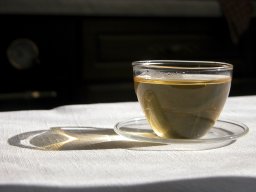
I’m not a great tea drinker but there are plenty of people I know who are seriously into brewing their optimal ‘cuppa’.

Today’s invention is a pretty simple way to ensure that they get a beverage which is neither insipid nor stewed.

Aradia_Di_tea1038.jpg

A waterproofed LED is held by a clip at a fixed distance from a small mirror which reflects light back to a sensor beside the light source. All of this is clipped to the inside of one’s cup. Having added a teabag and some hot water, to cover the sensor, the user waits for the tea to reduce the optical transmissability of the water -to a degree known to correspond to the preferred taste of the drink. This setting can be changed for different users, of course. A similar setup could be used for any infusion-based drink (eg coffee).

Then add milk (if necessary).

#416: Trigger guard

I’ve been reading about various terrible events in which police officers have used firearms inappropriately; sometimes firing their weapons because of a combination of inexperience, poor communication and understandable stress.

Today’s invention aims to provide a small extra element of calm before any triggers get pulled and everyone suffers.

Craig_Jewell_gun1035.jpg

This consists of a small digital voice recorder and loudspeaker unit which would clip to a weapon. A button, located away from the trigger, would have to be pressed before the trigger could be pulled (which suggests integrating it into the safety catch mechanism).

Pressing this button would cause the loudspeaker to emit a single, clear message such as “Stop, armed police”. This would greatly reduce the pressure on an officer in having to think of what to say under terrifying circumstances but also it would ensure that a warning had been delivered before the firing starts.

The warning could be recorded in a standard, calming but authoritative tone and also displayed as text on a screen mounted beneath the barrel (the screen text might be a way to provide an alternative language version in regions where no one one language dominates -eg LA).

#415: Shapenamer

Although there are some very clever tools which can identify an image by detecting and recognising shapes, their powers are still limited.

Today’s invention is a way to communicate to a machine the essence of what you are drawing. Imagine sketching an eye on a touch screen. When you’ve done this, you can popup a dialogue box and enter the word ‘eye.’ Change the colour of the pen being used to the inputting colour, draw something else and type in its name. Continue doing this until the entire drawing is labeled.

Robert_Aichinger_palm1033.jpg

The machine will be equipped with information about the spatial arrangements of visual elements (so that a car might be expected to have two wheels when viewed from the side and a frontal face will have two eyes a mouth and a nose).

This will enable a machine to infer eg that the thing just drawn above two eyes may be a hat (and ask the artist to confirm this). It will also allow eg automated animation in the sense that the positions of something marked ‘face’ and something marked ‘neck’ can never be farther apart than a certain critical distance, even when a dance is in progress.

Elements can be remembered as present even when one occludes another (just as in the real world) and they can also be automatically replaced by exemplars extracted from a database, making eg crazy photofit composite movies from combinations of photographic facial features.

This could be extended to allow tracing and labelling of elements in an existing image.

#413: Academos

The UK government is still wrangling with the question of how to hand out public money to university researchers: the infamous Research Assessment Exercise.

Since it’s so insanely costly to work out the ‘value’ of what researchers produce (some would say it was wrongheaded) there is a move to count up paper citations and use that as a metric for distributing the cash.

Zern_Liew_lab1026.jpg

Today’s invention is a better, ultra cheap metric method. Ask all academic staff (I’d certainly include postdocs) to rank the Professors they most respect at other institutions across the country. Money would be handed out to Professors (I don’t mean US-style university teachers) for their teams in proportion to the number of votes cast in their favour.

Some Profs wouldn’t get any votes -that’s called peer review and means they would only do teaching. Some would enter into backscratching cabals, but this would be easy to detect and very difficult to effect widely. This approach would weaken the old boy network and make it much more difficult for ‘political’ academics to influence research funding decisions.

I’d also scale down the funding councils to administer equipment/travel expenditure only (this would allow researchers to do fundamental work without being driven by a short-term political agenda).

The proposed scheme would also allow universities to buy and sell professors (with their groups) on a transfer market, according to their rating (which would be excellent for cross fertilisation of ideas). It would also work in both Arts and Sciences, be demonstrably fair and achieveable during a single afternoon via a secure website -thus saving millions for research rather than bureaucracy).

#407: Snaptrap

Rooms in office buildings which are sealed using a keypad lock naturally present a challenge to those people with an interest in seeing what’s inside (possibly even attracting extra attention).

Today’s invention is designed to discourage anyone from speculatively attempting to gain access, by trying a selection of likely n-digit entry codes.

Melodi_T_keypad1013.jpg

The lock mechanism would be equipped with memory to record the last say 10*n digits entered. If the latest attempts were insufficiently close to the correct code, an embedded digital camera would covertly take a picture of the individual keying them in.

This would allow Security to contact that person later (without mentioning the camera) and remind them that playing with locks is a bad thing to do.

#406: Siteweb

I’ve always had a bee in my bonnet about the 2-D, boring nature of website display. Having to view a site one page at a time is just so last-century. Web architecture used to be something I got paid to do, and so I’m aware that most sites are woefully inadequate in terms of the thinking underlying their structure.

As a technique for animating website maps, today’s invention is to use software like Prefuse.

Andrew_Beierle_mosaic1011.jpg

With this, I’d create an entire website in a single page (I can’t seem to find any examples in which this has been tried, but I can’t believe that none exist). Each old-style page would be represented as a scaled down version of itself, with visible links to others (similarly scaled). Searching for a given keyword would bring to the front those pages in which it occurred. Similarly, clicking on a small page would bring that scaled version to the front and centre position, whilst deemphasising all the others. Clicking again would fill the screen with the chosen page in the usual way.

This would also have the effect of forcing designers to consider the readibility of their pages (because they would need to be identifiable at a smaller scale). It would also highlight websites with too complicated an internal structure.

The ultimate tool would be one that could convert existing sites to this form of display automatically.