#2336: Drinkerface

I’ve drunk some beer in my time and also worked for several big beer producers. I can’t say any of it has been a ‘symphonic experience,’ but I do know how very seriously brewers take their packaging design.

Today’s invention is intended to allow people to drink beer out of an ordinary can whilst being able to smell and taste the product just as they would when using a glass.

glasscan

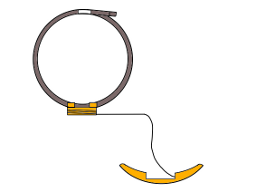
A glass drinking vessel has a tube poking out of its base. The tube has two squishy annuli (orange). One of these is poked through the top of a normal beer can.

Activation of the grey lever rotates a cam (grey), expanding the annuli and forming a seal between them and the can top.

This allows the user to raise the can to his or her lips and drink the beer from a proper glass.

#2333: CellCheck

Economists really believe they control business performance (just as lawyers really believe they control the moral behaviour of citizens).

Spreadsheets are a great programming tool for all such beancounters. It is much more difficult to overlook an error in spreadsheet calculations than when, for example, coding in C.

functioncheck

It’s certainly not impossible, however, as recent events have shown.

Today’s invention is a simple macro, like a spellchecker, which would examine all functions which use data in a bank of cells as input.

If the bank has non-zero values in any cells on its immediate periphery, it would issue an alert and automatically outline the cells in question.

#2329: SeemingSeams

Tailored suits have slightly less precise stitching than those that are made on a sewing machine.

This acts as another identifier of something bespoke and hand-made (beyond the personalised fit).

Zsuzsanna_Kilian_sewing

Today’s invention is a modified sewing machine which makes stitches in suits, or shirts -subject to a small, tuneable amount of ‘noise’ in terms of needle positioning.

This allows even-off-the peg clothing to appear somewhat more like a prestige product.

#2327: StreetSeen

I designed this advertisement for the HTC One competition recently.

In so doing, I thought up today’s invention.

blinkfeed

Given the effort involved in all of that pasting up adverts on hoardings, why not instead project the ads, using existing streetlights?

Advertisers could pay for each light in front of a hoarding to be equipped with a computer-controlled mini projector, powered from the light’s own electricity supply.

This would allow each hoarding to show a variety of different ads at different times, eg school run or afternoon drive-time. These projected ads could be films.

The films could even be made silent, but with a soundtrack that people could hear via the radio as they drove or walked by.

#2322: Pindemnity

As a visual thinker, I’m a devotee of Pinterest.

They take copyright of images seriously, but they get around the accusation of infringement by allowing site users to make links to their favourite images, so that their ownership, or at least origin, is made clear.

pinterest

It’s implicit in the Pinterest business model that if I merely link to your images, you will be served rather than inconvenienced.

I have a number of images on my home machine some of which I have copied (for nonprofit teaching purposes). These I’d like to have appear on Pinterest so that more people would be able to view and appreciate them.

The ownership of a subset of these pictures is unknown.

Today’s invention is a browser plugin which will automatically attempt to upload images to one of my Boards.

Each time it does this, it will perform a Google ‘search by image’ and if it finds a version of the image online, pins that instead.

This provides me with infringement protection via the above rationale.

#2321: MixerMachine

Research has shown that innovation within companies relies on serendipitous meetings between people who don’t normally interact.

We are four times as likely to communicate regularly with someone sitting six feet away from us as we are with someone 60 feet away.

Vending_Machines_wikipedia

Today’s invention is therefore a new way to engineer many more such meetings, without having to spend $5billion on a fancy new office.

Vending machines would be introduced with free drinks on board (preferably not those loaded with sugar, but caffeine is good).

When you grab a drink, using your identity card, the machine would sometimes provide a second one.

This will have printed on it (within the machine, in response to your card) the face, and a line of introduction to, a colleague in a different part of the company (as well as a map showing their location).

Employees would make their social networking and technical data available to the vending machine network within the business, so as to ensure that similar individuals weren’t being reintroduced to each other.

People would be both obligated and facilitated to walk to that person’s desk and give them the gift of a drink.

All cans would be recycled, since they bear the recipients’ faces.

#2314: Adverturns

Today’s invention is one of those teletext type scrolling displays which you see on the fronts of some buses.

This would be extended vertically and lengthwise, as indicated, to include information beyond the normal destination name eg adverts/news.

bussign

The idea is that, as the bus turns, so the message scrolls relative to the bus -so as to appear constantly at the same angle to a stationary observer.

This would add some novelty but also increase the viewing time which any individual could apply to a given piece of information.

#2308: Blowattage

I usually manage to get a phone signal these days when travelling on trains but, on long journeys, my laptop batteries often run out of juice.

No problem, you say…just plug the power cable into the socket provided…

Santiago_Cabezas_fan

Fine, except that the train companies can’t keep even electrical power supplied to carriages reliably (100 different safety warnings at ear splitting volume, repeated at every stop, but no damned electricity).

So, today’s invention is a micro wind turbine device that benighted passengers can poke out of the window of their carriage when the train company has spent all its maintenance budget on directors’ bonuses.

This might even take the form of a secondary cpu fan on an extensible cable that could sit in the window frame, attached to the glass using a rubber sucker or two.

#2303: GripMap

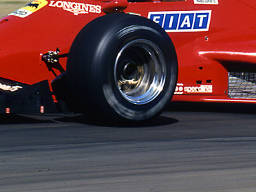
In Formula 1 racing, each tyre is expected to lose around 0.5 kg of rubber in the course of a race.

A large fraction of this comes off as granules which are blown or can be swept to the side of the track later.

file0001766816797

A significant amount, however, adheres to a racetrack surface, which makes the task of tacticians in the pits all the harder. Should we start on the softest compound…or wait?

Today’s invention is to allow abs brakes to be fitted to cars during practice.

Teams could thus identify precise locations on the track where wheels began to lose grip before racing began in earnest.

Teams would be required to pool their data, so that everyone would have access to a roughness map of the track on race day -to help them make more effective tyre selections.

#2302: Collareel

Today’s invention is a dog lead with the added benefit that when your animal is off-lead, it carries the whole thing itself.

A small, spring-loaded reel of strong cord is clipped to the ordinary lead.

collareel

It is shaped to fit closely to the collar and thus be impossible for the dog to remove or for it to tear off while crashing about the undergrowth.

When you want to reign in your canine, first catch it and then pull the lead out to normal length.