#1764: LoftLofting

Insulation material in a roofspace has a tendency to compress -especially if you want to use a double layer.

This greatly reduces the effectiveness of heat retention.

Today’s invention is a cheap plastic fork with needle-like tangs (red).

When the insulation is laid, and has had a chance to expand or ‘loft’, many of these forks would be pressed into the sides of each batte in order to maintain its thickness (and air retention) over time.

#1763: GhostMat

As far as steering a cursor on-screen goes, I prefer the Lenovo nipple/joystick design myself.

Today’s invention, however, is for those of us who can’t get used to using a touchpad on a laptop and yet still want to use a standard mouse -despite not having adequate deskspace (when travelling, for example.)

It consists of a chain of large, plastic links which can bend only in the horizontal plane.

To one end of this, a conventional mouse is attached.

As this is moved through the air, the links in the chain transmit their relative rotations to the laptop, so that the cursor can still be accurately positioned on the screen.

The chain can be easily folded up and stowed, when not in use.

#1762: Choonse

Today’s invention is inspired by my friend’s attempts to deal with a phone company -ambitiously enough, via the phone.

She was placed on hold for half an hour by O2 and left listening to dreadful ‘music’ -presumably because they were too stingy to license the use of anything vaguely tuneful.

Ideally, calling a company should immediately put you in touch with an intelligent, helpful human. Whilst this remains beyond lots of companies, today’s invention is a playlist for those on-hold.

Everything else in the arena of phone service is based on a select-a-number process, so why not enable people to choose some music from a numbered list of artists or tunes?

You could even take a ‘feeling lucky’ option to listen to, or scroll through, a number of new, unsigned musicians…thus supporting creative people that the phone industry purports to value.

If you had to make several such calls, the system could remember your favourites and offer them first…or even use the opportunity to recommend something new but similar.

#1761: TimeSaver

All this turning backward and forwards of clocks is insane.

I’m reliably informed by my highly numerate wife that it takes 220 manual rotations to adjust our stove clock.

Today’s invention is a machine incorporating a camera which can look at the indicated time on all such old-world clocks.

Twice a year, it would be attached, using a clamp, to whatever knob is supplied and could thus rotate it, using a small motor, until the correct time is displayed.

#1760: ShaftShow

Travelling in lifts is not very exciting for the most part.

Today’s invention adds a certain extra interest.

A normal lift with opaque surfaces has two large screens fitted into the floor and ceiling (the bottom one would need to be protected with walkable glass, as in the deck at the top of the CN tower, for example).

The screens would display high-definition video. This would show a view upwards, apparently through the ceiling and downwards, apparently through the floor.

All traces of the actual lift shaft contents would be gone and instead you could have eg views of advancing into a cloud-filled sky or towards the surface of the sea from the depths.

The upper and lower images would be coordinated so that the passing of this virtual backdrop would appear continuous.

It would even be possible to have objects seem to fall towards the lift and then through it.

#1759: Meltingpoint

I hated using wax crayons at school. They almost never gave a good quality line when drawing and ‘colouring-in’ should be outlawed as a cruel and unusual punishment, in my book.

Today’s invention is a small improvement in the situation for schools that haven’t yet got to grips with felt-tip pens.

A small tube, wide enough to accommodate even those absurdly fat crayons, has a conical metal internal surface.

When the device has a crayon pressed into it, a small heater fires up as shown, melting the end of even horrid crayon stubs until a nice, sharp point is created (and without wasting all those sharpenings I used to hide in my desk).

#1758: Antianimal

More playing about with camouflage. Alan Turing wrote the book on pattern formation.

One of his conclusions, from theorising about reaction-diffusion chemistry, was that small body parts were more likely to have stripes and larger body parts to bear spots.

Today’s invention therefore is to create a camouflage pattern which inverts this logic (eg for hunters to wear). Such an outfit would have spotted ankles, neck and forearms and increasingly stripy patterns towards the middle of the body.

The idea is that if game animals are naturally attuned to a particular arrangement of markings, as indicative of a large predator, they will be less likely to detect the shape of a person wearing a highly atypical variant on this.

#1757: Camoufoliage

It’s been a while since I indulged my boyish enthusiasm for things military, so here goes…

Today’s invention is an extra-tall periscope for armoured vehicles.

This would normally be clamped flat to the machine’s upper hull. When required, the turret would rotate, attach the periscope tube (yellow) to the gun mantle and slowly raise the scope until it was nearly vertical.

This would provide the commander with a good view of the surrounding territory, especially when fitted with infra-red imaging equipment. It would also isolate the optics from the main weapon’s normal impacts and vibrations.

The periscope would be stored with local foliage attached so as to give a good impression of a tree.

The rate at which this periscope would be raised, when not in a rush, could be controlled by computer so as to be too slow to be perceived by a human observer.

#1756: Espinage

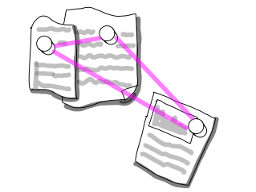
I’m a huge fan of spy films and whilst watching ‘Tinker Tailor Soldier Spy’ recently it occurred to me that arranging items on a pegboard was an investigative approach worthy of an upgrade.

Today’s invention, therefore, is a smart pinboard.

As well as being able to write and draw on the background, as in a conventional smartboard, this system would enable documents etc to be attached to the board using magnetic ‘drawing pins’.

Each pin would contain a series of leds, each of which could be masked or illuminated in a chosen colour so that the cold-war era ribbons showing connections could be superseded. This would enable items of evidence to be assembled in a 2-D framework and their relationships displayed.

Any two items could be linked by the beam joining their pins. Beams would be frequency coded so that moving an item would allow the beams from other items to follow and maintain the pattern.

A pin might be able to read and store data from its document and even moved by computer-controlled magnets within the board so as to shake up thinking and spot possible new connections (arraying paperwork by date, for example, would be feasible).

#1755: Teachtime

Today’s invention is a touchscreen watch suitable for children trying to learn about the weird alternative ways we have for describing the time of day.

The top left image shows the verbal version of the conventional description of minutes in the position and orientation of the hand itself. A moment later, the same convention would be applied to the hours description. This would clarify one difficult part of telling the time…getting the minute and hour descriptions in the right order.

A contrasting arrangement could then be generated for the same time as described according to the 24 hour clock (in which the order is, confusingly, hours then minutes.)

A further description could then appear which would be simply the digital version of this time ie 9:15