#475: Noveliser

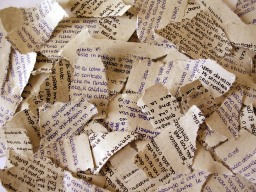
In this era of the mash-up, lots of quality content finds itself being ‘repurposed’.

Today’s invention is simply to make a book of a feature film semi-automatically: based on the text of subtitles and some carefully chosen stills from the movie. Subtitles, I’ve noticed, now contain verbal descriptions of sound effects and enable people to basically follow what’s going on, even without the moving pictures. Adding in some scene directions from the original (digital) script would also aid readability.

Matin_Dadfar_reading1178.jpg

This could be another low cost way to add to the long tail of commercial opportunities for certain films, after their initial sales have begun to decline (it’s also easier to follow the plot in such a book if the story is already reasonably well known).

#474: Convectasaur

Open fires are very attractive but they tend to be poor at distributing heat within a room, let alone around a house.

Today’s invention is a device which allows a single fireplace to provide more uniform home heating.

Sasan_Saidi_torosaurus1176.jpg

A mobile robot (ideally with stair climbing ability) carries a metal plate on its back. It is programmed to hold the plate in contact with the flames until its temperature reaches a target value). The plate is withdrawn inside a wire mesh box and the robot then moves to a region of the home where the ambient air temperature is detected to be low.

Air passes through the mesh cover, across the vertical plate and becomes warmed. When the plate temperature has decreased by a certain amount, the robot returns to the fire.

You could have several of these devices per house, coordinated to appear at the fireplace in turn. Use Pleos and it might even resemble the disputed cooling fins of certain dinosaurs.

#473: Reptilights

Monostatic bodies, such as the Gomboc in the picture, will roll around (like an inverted turtle) until they find the one orientation in which they are stable. (These objects are different from something like a weeble, or weighted top, in that they have uniform density).

This suggests a new form of domestic lighting. In today’s invention, an array of gombocs would be located on a metal tray. Each would contain a circuit with a small watch battery, an led and a pair of slightly protruding contacts at the stable basepoint on the ‘underside’. These contacts would act as a switch which would be closed by each body contacting the tray as it rolls through the stable position.

Gomboc1172.jpg

Any movement of the tray would set in motion all the oscillating gombocs, switching on and off their leds at the rolling frequency. This would produce an interesting light pattern in response eg to pulling a chair or a drawer out…or opening a door. Using bodies of different sizes or densities would add even more variety to the lighting patterns. Translucent bodies with embedded lights would be particularly attractive.

#470: ZipFaster

‘Footering’ is the term I use to describe when I’m all fingers and thumbs trying to engage the zip fastener of my winter coat. I’m always doing this, needless to say, when it’s winter and when the fingers and thumbs themselves are starting to freeze.

Today’s invention is an attempt to allow easier, even one-handed, zipping up.

zip.png

The diagram shows a future zip ‘keeper’ with a pull tag on the left hand side. Each half of the keeper is shown in a different colour: one half would be permanently attached to each side of the zip.

When both halves of the keeper are grabbed in one hand, magnets on each of the meeting faces align them and join the bottom ends of the two sides of the zip together. This forces the two sets of zip teeth to mesh (the bottom-most ones may have to be created with slightly more open teeth engagement than normal, to allow this).

The zip can thus be sealed in the usual way, but with much less visual supervision and dexterity required.

#468: Jackshield

Imagine a piece of delicate electronic equipment, which would be guaranteed to be fragile and vulnerable to dirt, yet which is then expected to be routinely forced through holes in plasterboard and along dust filled gaps between walls and floors.

Even though lots of kit is now wirelessly connected, the humble RJ-45 plug is still the lynchpin in many networks. Think about how long it takes to get one of these square-headed guys from A to B, only for it then to be found to be broken -mechanically or electrically, or both.

Christian _Kitazume_plug1164.jpg

Today’s invention is a cap which fits over such a connector and which streamlines its passage through tight holes. This is made in a tough, flexible polymer and takes the shape of a long, thin tapering ‘nose’ with a low-friction coating. There would be a loop at the end of the nose to which a cable can be attached for dragging the cable behind it. The RJ-45 plug is sealed tightly within the nose, so that dust is excluded and the retaining tab can’t be broken off in transit.

#467: Roadrating

Lots of countries demand that drivers under instruction advertise the fact by displaying eg an ‘L’ symbol or its equivalent. Why, I wondered, don’t we also insist on similar displays by those people who have incurred penalty points on their licences for poor or inconsiderate driving?

Today’s invention is a simple row of orange LEDs mounted in the back of everyone’s car. This would act as a bar chart, showing other drivers the extent to which someone was either a Learner or a points holder. Ten orange lights showing? …give me a wide berth.

Blas_Lamagni_light1159.jpg

This scheme could be extended to allow drivers to comment on each others’ driving skills in real time by transmitting signals from car to car which would automatically contribute to one’s orange light total. Signals from other drivers would be given less weight or shorter duration than official points. Give too many negative points to others, though, and you start to receive oranges yourself.

Ideally, I’d like to see anyone with eg 8 orange lights paying significantly more for their fuel than someone with none.

#465: Bucketflow

There are several new digital drawing and painting tools I’d really like to see made available, based on the behaviour of real paint.

The first of these is pretty simple. Today’s invention is a ‘bucketfill’ tool whose paint progresses radially outward from the point clicked on the screen at a pace which allows the user still to keep track of the paint’s leading edge -and stop its progress if necessary.

Craig_Jewell_paint1102.jpg

Not only would this be more like dropping a dollop of real paint (you could incorporate various realistic sound effects and transient translucency as well -if you had an embarrassing surplus of computing power). I’d also include some surface tension, viscosity and wave physics so that, as the paint front approached any small inadvertent gaps in the surrounding ‘dam,’ it wouldn’t necessarily spill out and instantly colourise the entire screen but instead highlight these glitches so that they could be plugged.

Aside from these aesthetics, the time course of filling a particular shape (from a variety of known starting points) could be used by the program to identify the shape being painted.

#462: Soundsearch

Search has become fascinating for two reasons: the recent availability of an abundance of interesting stuff (if only you knew where it was) and the possibility of automating its retrieval.

One of the biggest problems, it seems to me, is that we currently aren’t really making use of all the tools available to us. It’s still hard work to find things visually or kinaesthetically in a reliable way, but sound offers a more tractable approach.

Valentina_Degiorgis_words1151.jpg

Today’s invention is to store a phonetic representation of every word in a document or webpage. This would enable a search by sound to occur in which we could say “find me things that sound like fandango” or even, in wildcard mode “…things that sound like blahblah_blah_blah_ford.” This is pretty much how I try to retrieve people’s names from my own memory, and it seems particularly good for things whose names don’t mean anything but whose phonemes may be identifiable as words …eg brands like coca-cola or phentermine or whatever.

This makes me wonder if, by populating one’s website with spam brandnames, you would be less bothered by the makers of smarter, targeted spam (the kind of message about which you think ‘is that spam or is it a genuine message?’ ). These people know it’s a bad idea to pepper spam blockers with data that helps them extract a characteristic pattern and thus defend themselves.