#423: Creditext

Cut-and-paste is now part of the fabric of everyday digital activity for huge numbers of people. When you have transferred something from one file to another, it blends in seamlessly, taking on the same status as the original content.

Today’s invention aims to give some credit to the author of each such snippet ( way beyond the usual level of tracking changes).

Hilde_Vanstraelen_text959.jpg

Every document created would have a unique identifier (a code representing the author, software, date etc). Whenever a section of text, or other data, was copied and pasted into a new file, that content would retain the identifier of the source document so that the provenance of the transferred parts would always be available to anyone interested. This would automatically credit the originator.

This would greatly limit the scope for plagiarism, as well as calming the fevered brows of those who may be overly concerned with defending their copyright.

It now seems that someone is following up this idea -see this.

#422: Uncrazy paving

I’ve been thinking a lot about landmines lately. They seem to serve two purposes: as tactical barriers to an advancing army and as a way to deny access to an area (for an unspecified period in the future). These weapons seem particularly unpleasant because they affect civilians directly and keep doing so for years after the latest crazy warfest has abated.

I’m working on ways to neutralise mines themselves, but today’s invention is an approach which restricts the military benefit of laying the damn things in the first place.

Sonja_Mildner_path1051.jpg

Local people can defend their territory from minelaying by creating multiple smooth-earth paths across their land. These could be created using a multishare plough and lots of footstamping (some water might also help, if available).

The smoothness of these paths would make it impossible to conceal mines beneath the surface, leaving clear routes along which people could move and rendering the sowing of mines in the normal land to either side futile. The paths could be sunbaked and straw-packed, making them rainproof to an extent and more durable to foot traffic.

If achieveing smoothness were a problem, the surface could have elaborate patterns impressed on it (during the ploughing and stamping process) which would be difficult to duplicate at short notice by an invading army. Imagine a Bayeux Tapestry depicting local history. Afterwards, the land can be returned to normal use by breaking up and digging-in the baked mud.

#421: Tattoon

People get tattoos done for all sorts of reasons, I suppose. At the very least, it’s a form of adornment or display.

Today’s invention allows people, who want to make their display public, to advertise the fact that they have a tattoo, even when they are rugged up for the Winter.

Gerla_Brakkee_tattoo1048.jpg

Every time a tattoo is performed on someone’s skin, a digital photograph would be taken and passed to an automated embroidery machine. This would create a representation of the tattoo in question on eg a shirt or coat -ideally directly over the location of the tattoo itself (and in the correct colours).

People might choose to have only a simplified version embroidered, in order not to steal the thunder of the underlying pattern, when revealed. (Actually, I wonder why automated tattooing itself is not widely available?)

#420: Kidlids

Actually, whilst on the subject of child safety, why don’t more potentially lethal things find themselves isolated from youngsters by the use of ‘childproof’ bottle tops?

If these are deemed generally safe enough to protect kids from dangerous drugs, then surely one could be moulded into eg an electrical socket in such a way that an on/off switch could be concealed behind a screw-off lid (the kind you have to push in hard and then unscrew).

Adam_Ciesielski_pills1045.jpg

How about knives and shavers with childproof lids or stairgate release knobs or even a tv remote in a childproof enclosure?

I’m sure the patent holder, if there is one, would be only too happy to licence this technology for a vastly increased array of applications.

#419: Socketsafe

It seems that a safety issue still exists in connection with three-pin plug sockets. It used to be thought that equipping such sockets with shutters and putting in place blank plugs would be enough to stop children from electrocuting themselves.

The latest edition of E&T magazine draws attention, however, to the possibility of a child removing eg a blank and replacing the longest prong, rotated through 180degrees, into its hole. This would potentially allow lethal access to current from the other two apertures.

plug1041.png

Today’s invention is one way to deal with this. A plastic shelf, shown in orange, is secured to the wall socket via the screws holding the front plate. This protrudes from the plate so that it’s impossible to get the long prong of a plug or blank anywhere near its hole in anything other than the correct orientation.

This is perhaps another example of why we need to educate people to think outside the narrow confines of being an ‘electrical’ or a ‘mechanical’ Engineer.

#418: Eye tea

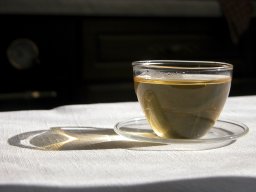
I’m not a great tea drinker but there are plenty of people I know who are seriously into brewing their optimal ‘cuppa’.

Today’s invention is a pretty simple way to ensure that they get a beverage which is neither insipid nor stewed.

Aradia_Di_tea1038.jpg

A waterproofed LED is held by a clip at a fixed distance from a small mirror which reflects light back to a sensor beside the light source. All of this is clipped to the inside of one’s cup. Having added a teabag and some hot water, to cover the sensor, the user waits for the tea to reduce the optical transmissability of the water -to a degree known to correspond to the preferred taste of the drink. This setting can be changed for different users, of course. A similar setup could be used for any infusion-based drink (eg coffee).

Then add milk (if necessary).

#417: Flexi-mesh

When gear teeth mesh together conventionally, each can be subject to a high level of stress due to the contact pressure: especially in high-torque applications. This obviously leads to shortened working life.

So now imagine pressing the gears together so that, instead of making contact via a single pair of teeth, there is a flattened region, consisting of many teeth, where the gears mesh.

Alistair_Williamson_gears1037.jpg

Each of these ‘wheels’ would need to be constructed in the form of a caterpillar track. Instead of a rack and pinion arrangement, this effectively becomes two racks of different lengths.

There would be a degree of indeterminacy as to how much stress each pad carries at any moment but this approach would reduce the stress on each track pad and also potentially allow variable contact geometry for different types of duty.

#416: Trigger guard

I’ve been reading about various terrible events in which police officers have used firearms inappropriately; sometimes firing their weapons because of a combination of inexperience, poor communication and understandable stress.

Today’s invention aims to provide a small extra element of calm before any triggers get pulled and everyone suffers.

Craig_Jewell_gun1035.jpg

This consists of a small digital voice recorder and loudspeaker unit which would clip to a weapon. A button, located away from the trigger, would have to be pressed before the trigger could be pulled (which suggests integrating it into the safety catch mechanism).

Pressing this button would cause the loudspeaker to emit a single, clear message such as “Stop, armed police”. This would greatly reduce the pressure on an officer in having to think of what to say under terrifying circumstances but also it would ensure that a warning had been delivered before the firing starts.

The warning could be recorded in a standard, calming but authoritative tone and also displayed as text on a screen mounted beneath the barrel (the screen text might be a way to provide an alternative language version in regions where no one one language dominates -eg LA).

#415: Shapenamer

Although there are some very clever tools which can identify an image by detecting and recognising shapes, their powers are still limited.

Today’s invention is a way to communicate to a machine the essence of what you are drawing. Imagine sketching an eye on a touch screen. When you’ve done this, you can popup a dialogue box and enter the word ‘eye.’ Change the colour of the pen being used to the inputting colour, draw something else and type in its name. Continue doing this until the entire drawing is labeled.

Robert_Aichinger_palm1033.jpg

The machine will be equipped with information about the spatial arrangements of visual elements (so that a car might be expected to have two wheels when viewed from the side and a frontal face will have two eyes a mouth and a nose).

This will enable a machine to infer eg that the thing just drawn above two eyes may be a hat (and ask the artist to confirm this). It will also allow eg automated animation in the sense that the positions of something marked ‘face’ and something marked ‘neck’ can never be farther apart than a certain critical distance, even when a dance is in progress.

Elements can be remembered as present even when one occludes another (just as in the real world) and they can also be automatically replaced by exemplars extracted from a database, making eg crazy photofit composite movies from combinations of photographic facial features.

This could be extended to allow tracing and labelling of elements in an existing image.

#414: Musicomb

I recently bought some miniature barrel organs for my children which each consist of a hand cranked drum with protrusions which hit the tangs of a multiprong tuning fork as they pass. These toys cost about £2 each and still give a recognisable rendition of various ‘classic’ tunes.

Today’s invention is a novelty consisting of a metal comb which, when rubbed from one end to the other, plays a tune in a similar way. Each tooth of the comb would act as a tuning fork because, although all lengths would be equal, they would have different thicknesses. Some teeth might have to be removed, of course, in order to provide the right musical timing.

Jose_Conejo_Saenz_comb1029.jpg

Combs might be supplied which mimicked the ringtones of people’s cellphones and which allowed individuals to introduce themselves to each other by saying effectively ‘Can I talk to you?’