#1209: Coughvac

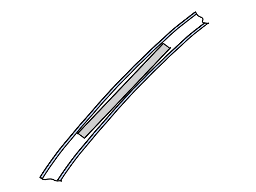
I’m perpetually irritated by our vacuum cleaner hose blocking up. Today’s invention is a response.

Just as when someone develops a restriction in their airway, this vacuum cleaner would have a sensor fitted to the motor which could detect the rise in current drawn when the hose began to block.

Quickly, it would change the motor direction, causing a sudden reversal of flow or ‘cough’.

This would last for only a fraction of a second, so that there would be no danger that a blockage could emerge from the hose inlet at any speed.

The cough could be repeated several times in succession if the motor load was not rapidly reduced.

#1208: Dogtag

There is now great interest in robotic systems which can help retrieve wounded soldiers from a battlefield.

Today’s invention is a hybrid animal/machine system which does not rely on machine intelligence -and might therefore work robustly.

A small terrier is equipped with a light body shield. This is attached to an armoured trolley via a lightweight cable. As the dog runs, the cable becomes slightly taught and the animal’s choice of direction is transmitted to the trolley’s motors via the bend within the cable. The dog can thus direct the trolley, running on powered tracks, but without having to pull it.

When the dog detects a wounded soldier it finds the scented tag attached to a harness with which he or she is equipped. The dog has been trained to drag the tag and drop it into an aperture on the trolley. A winch automatically pulls the soldier aboard and the dog runs back to base pursued closely by the trolley.

#1207: Viscode

Today’s invention is a private key encryption device which relies on fluid dynamics.

Highly viscous flow at low velocity is, near-as-dammit, reversible.

Today’s invention is to use an apparatus such as that in the film linked to above. A message (or an image) would be printed into the body of a gel-like material using eg laser-based rapid prototyping techniques.

This would then be subject to a pattern of low speed rotational shear flow, using a rotary system as shown, to obscure the content. This rotation would however be undertaken by an inner cylinder which could move both circumferentially and axially (as controlled by the user’s choice from a large number of screw cam ‘keys’). The gel could then be transported physically anywhere without the message being decipherable.

It might even be possible to send only images of the gel electronically (ie its local contrast distribution). On receipt of the message, it could be decoded by reversing the action of the original key.

#1206: Eyedetic

Today’s invention is a browser plugin which remembers what content a user has scrolled through before and, if asked to display it again, does so with the content greyed out. The more showings, the paler the content.

This would alert the user, before starting to re-read any such material, to the fact that this was old news -without having to filter and completely reformat the stories on eg the BBC website, only some of which change in the course of a day.

It would also lessen the frustration associated with coming across content repeated on different sites dressed up in alternative colours, formats and fonts.

#1205: VacSack

Astronauts, especially rookies, apparently have great trouble sleeping in near-zero gravity.

They seem to miss the sensation of pressure on their bodies from a horizontal bed and covers. Strapping themselves in is a poor substitute.

Today’s invention is therefore an astronaut sleeping bag which forms a loose seal around the sleeper’s neck. The rear face of the bag is attached to a spacecraft wall surface at many locations.

The other end of the bag is connected to a small, silenced vacuum pump which sucks out the air and has the effect of holding the astronaut down onto the wall surface with a user-controlled pressure. This feels more like the experience of sleeping in his/her own, 1-g, bed at home.

#1204: ShadowScreen

Today’s invention is a possible enhancement to existing touch-screens. A stalk-mounted lamp on eg a mobile device casts shadows of one’s fingers onto the screen.

When the shadows are seen by a small embedded camera to lie on certain screen elements, these are primed in the same way that normal rollover scripts work in a webpage.

This allows eg each key displayed on a small cellphone screen to grow as a finger approaches it, in order to make dialling easier.

#1203: Skintied

I’ve described knot-tying techniques before and today’s invention is a new one. Imagine trying to tie a complex knot for the first time.

Take a long rope of snap-together beads and roll around it a sheet of moist cardboard -or pastry.

Have the complex knot tied by an expert so that the coating is included in the body of the knot (have the expert make many of these). Allow the coating to dry and stiffen, forming a knot-shaped shell. Pull on the free ends of the beaded rope so that it can be extracted.

You now have a shell which can be used to pass rope through, from one end -automatically forming a complex knot. The coating can now be stripped off, reconstituted and reused, leaving the finished knot behind.

#1202: LoudCloud

Today’s invention is a shotgun cartridge which contains a secondary charge (This charge might be radially asymmetrical).

Each cartridge could be set, before loading, so that after a given flight time, this secondary charge would ignite; causing the pellets to be scattered in a pre-determined pattern around the centre of mass of the cartridge.

The pattern could take a variety of geometrical forms -from a diffuse cloud, meant to sting but not damage a target, to an annulus, intended to punch a hole in a partition wall.

#1201: Slopetop

Today’s invention is a screen management program which causes software objects (such as folders and documents) placed on a laptop desktop to behave as if subject to physical forces (primarily gravity). This would cause items to slide to the bottom of the screen unless ‘pegged’ in place.

Similarly, ‘paint’ applied to a graphic would drip downscreen in a physically real way.

All of these simulated phenomena would be influenced by the angle of the screen to the horizontal (ie the farther from vertical, the slower the movement).

#1200: StrutSplint

Struts are often used in engineering systems, usually mutually cross-braced. Today’s invention attempts to provide these members with a form of adaptive internal strengthening.

Each strut (not necessarily of circular cross-section) has within it a conduit. This contains a strong, light metal rod. The rod can be moved along the conduit by a pneumatic pressure difference created by a pump fitted to one end.

When a strut is stressed, and begins to bend to a specific extent, the periodic passage of its rod may be locally slowed (which can be detected as resistance to the drive pressure, which is then removed in response).

This allows a rod to be automatically positioned at the point of maximal bending -reinforcing it before damage occurs.

When the stress is removed, rods can continue to patrol. A more advanced version of this idea involves the use of multiple reinforcement rods at different locations within each strut.