#885: Gummedgun

People have, in general, limited self control and, when given access to powerful firearms in highly stressed situations, all sorts of mayhem therefore ensues.

Today’s invention offers a way to limit the damage done by people pulling triggers.

chris_eyles_gun

A fraction of all bullets sold in popular calibres would be secretly substituted with a new design (perhaps by members of yet another covert government agency).

The substitutes would be externally identical to their deadly siblings but inside they would contain a very small amount of gunpowder and a separate chamber filled with cyanoacrylate glue and sand.

Pulling the trigger on one of these rounds would result in no bullet discharge but instead a small rupture of the casing would occur -propelling the adhesive and sand particles into the mechanism of the gun. This would render it effectively irreparable and cause people to lose faith in all such weapons.

#883: Crashcrates

I came across a story recently about a light aircraft that crash landed, fairly successfully, because it happened to come down on a field of mobile toilet cubicles.

Similarly, stuntmen use nested cardboard boxes to absorb the energy when they fall onto them from a great height in the course of filming.

dora_kalmar_box

Today’s invention is a way to make crash landings safer for airliners. The area between runways is usually at least as big as the tarmac itself. This could be equipped with a large number of deformable boxes buried just under the sward.

In the event of an undercarriage or engine failure, a pilot could be directed to belly flop on an expanse of these containers -which would need to have its perimeter delineated by remotely-controlled flares (it might even be worth filling the boxes with water, loaded with fire retardent).

The boxes would be reasonably cheap to make, fill and deploy -whilst still maintaining a low profile.

#881: Tearsdropped

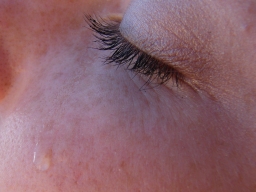
Applying eyedrops to an uncooperative child or a pet is often a difficult job. The drops often end up outside the eye. This medication can be expensive and sometimes it’s critical to use exactly the correct number of drops.

Today’s invention is a new ‘dropper’ device. A clear plastic tube can be applied firmly to the orbit of an eye (via a rubber eyepiece). The other end is attached to an inhaler device, delivering eye medication in aerosol form.

torli_roberts_tear

A small mirror is placed inside the clear tube, behind the aerosol delivery nozzle. This allows software, running on a digital camera, easily to detect when the eye has blinked closed. At this point, the inhaler release button is activated electronically, for a few milliseconds, and a precise amount of medication sprayed into the opening eye.

#880: Rerooter

Tree roots tend to cause damage to water pipes, sewers and foundations. This is especially true in arid places -like my in-laws
garden in Melbourne.

Many ‘solutions’ involve killing the trees by feeding them eg copper sulphate via a porous pipe.

alessandro_paiva_roots

Today’s invention is a way to decoy roots effectively without killing too much foliage. A vertical, porous pipe is sunk into the lawn, causing it minimal damage. As well as water-passing pores, the pipe contains holes big enough to allow small roots to pass inside without damaging the ceramic of the pipe. A very small reservoir drips water onto the top edge of the pipe, keeping it just moist enough to attract the roots.

A cylindrical steel liner, containing large, sharp-edged holes, is then forced down the inside of the pipe, chopping off the most recent small roots which have penetrated and collecting these in its base. The liner can be withdrawn and the choppings buried elsewhere in the garden, away from buildings, etc -thus reclaiming the water they contain.

#878: Gradugrip

Rubber is a magical material. Today’s invention is an attempt to make better use of its properties in a new form of car tyre.

In the top of the image, a car’s wheel is shown consisting of two discs, mounted on telescoping shafts and linked together by a thick rubber skirt. This allows low rolling resistance, which is good for fuel economy when travelling at a uniform speed.

tyres

When accelerating or braking, gas is forced rapidly down the gap between the shafts so as to inflate the rubber skirt into a cylinder, thus allowing much better contact with the road surface.

This obviously allows each wheel to experience a continuously variable degree of grip.

#877: Bend-attend

It seems that people pay particular attention to certain movements (it’s recently been suggested that Autists develop a preference for coordinated movement and sound, for example).

Simple linear movement is easy to predict and so our eyes automatically jump to their best estimate of where it will end up. More complex motion requires us to pay a great deal more attention to it.

aurelio_scetta_motion

When there are both simple and complex motions in a scene, eg when driving, we will therefore tend to completely miss certain curvilinear movements -this is probably a cause of those accidents in which people say “I didn’t see him until it was too late…He came out of nowhere”.

Today’s invention is an image processing algorithm which undertakes a realtime analysis on the restricted visual field into which a vehicle is about to move (with emphasis on the margins -from which objects will tend to emerge). It applies directional (Sobel-esque) filters and, when a new curvilinear motion is detected, it issues a “psst”-type warning to the driver.

#875: ZhabotINKy

Belousov–Zhabotinsky reactions are examples of chemical clocks. Specifically, by mixing two liquid compounds, a solution forms which changes colour every few seconds and which can be made to persist for several hours.

Today’s invention makes use of this phenomenon for the purpose of providing printed animations.

lize_rixt_ink

An inkjet printer is modified to dispense dots of the required chemical reagents (these can have their concentrations automatically altered in order to create different colour-change effects in the final document).

A page can then be printed in which regions switch colours periodically and thus enhance advertising material, storytelling or emergency instructions, by providing on-paper animation.

#874: Orbitubes

Debris in space is threatening a lot of valuable missions and endangering lives.

Today’s invention is intended as a possible contribution to cleaning up the mess before it gets bad enough to cause a communications blackout or a fatal accident.

peter_w_orbit

A number of long metal tubes is placed in orbit. They would be of different diameters and with one end closed. These would be repositioned radially, using traditional thrusters, but always aligned circumferentially so as to admit small items of debris into the leading, open end. A detection system would be carried which could spot and avoid oncoming items bigger than a certain fraction of the tube bore.

Smaller crumbs would be involved in a series of glancing collisions with the interior wall of a tube, causing their relative motion to decrease and heating the tube by this frictional contact (but without damaging or deflecting the tube significantly).

The heat generated would be used to power the thruster and imaging system. The tubes would gradually harvest the fragments they came across at each radius. Eventually, each tube would be effectively full and forced to fall from orbit, incinerating itself and its contents completely on re-entry.

#873: Motormouse

Today’s invention is a computer mouse which rides on a pair of wheels, which is free to rotate about a vertical axis. The wheels are powered in such a way that when the cursor is placed on certain graphical elements on the screen, the mouse can be physically driven (across the desktop) as the cursor moves towards the next item that needs attention on the screen.

This system can be used as a training device to help someone learn a specified sequence of repeated screen interactions, for example.

matthew_bowden_mouse

#870: MatrixMattress

Today’s invention is a substitute pillow, consisting of an array of rods on the end of each of which is a small rubbery sphere (like a squash ball).

The rods are free to move vertically, each being supported by a spring and damper mechanism. This allows someone to sleep comfortably on the tightly-packed matrix, receiving full neck support, irrespective of whether they lie on their back or side. The spring rates might be controlled electronically to provide the optimal personalised stiffness distribution for comfort.

vicky_s_pins1

Several such pillows could be used to create an entire bed surface. The rods might also be vibrated to avoid the possibility of bedsores.