#2846: Electrickery

I’ve been thinking about electric car conversions. They seem pretty complicated.

Here is a quick and dirty idea that I’ve suggested to my heroes at Garage 54
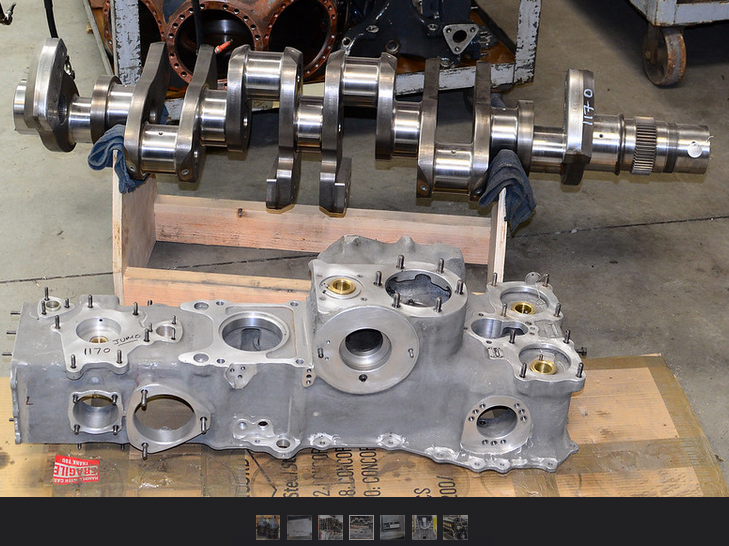
Throw away every part of a petrol engine apart from the crankshaft and the generator. Attach a big battery to the generator and run it backwards as a motor, driving the prop shaft(s).

We might need to duct some more air over the generator, maybe 😉

There you go. Will it work? Over to you Товарищи!

#2845: Trailever

Many of us were taught to operate the front brake on a motorcycle only in an emergency and only when not leaning and only using all four fingers.

This is hard to recall when you need to brake suddenly on a bend.

Today’s invention is a brake lever which is attached to a lean angle sensor.

When the bike is leaning, only a short length of brake lever is exposed (blue). As you straighten up, so all four fingers can grab the brake (green).

This also helps with trail braking, which is a skill I think is important.

#2844: CaressCot

It seems that babies stroked at a speed of 2.5cm per second, stop crying and calm down.

What’s so special about 2.5 centimeters a second? That’s the speed at which our primate cousins groom one another. These neurons have been around far far longer than we have. They’re waiting for that signal that says somebody else is looking out for you, that they care.

So today’s invention is a robotic cot base, suitably upholstered, but along which small vibratory ripples would be made to pass at 2.5cm per second.

This would be felt by a baby lying in any orientation and help it to sleep.

#2843: Stresshow

Today’s invention is an application of swapping reels of 3-D printing material automatically, so that the resulting print can consist of different colours.

These colours would be dictated by the Finite Element stress model of the structure in question.

Areas of predicted high stress could be coloured eg red, so that such areas would be more readily inspected for signs of wear or fatigue in use.

#2842: Dampatches

The Millennium footbridge in London gave engineers pause for thought when it was found to have a natural frequency close to that of human walking. This caused the bridge to move in response to people’s steps, which, in turn, caused people to synchronise their gaits, exacerbating the problem.

Big dampers have since been affixed at significant cost.

In order to allow architects to do their usual pushing the envelope, today’s invention aims to reduce the sensitivity of narrow bridges to the energy inputs from feet.

A version of this type of energy absorbing surface could be developed that extracted a larger fraction of energy from walking (using heavier, small-scale dampers). This would reduce the energy available for unfortunate bridge vibration (and slow walking speeds too).

Areas of the surface which made bigger contributions to bridge movement could be identified and programmed to have stiffer dampers.

#2841: Disgustopper

In the sphere of non-lethal weapons, I want to create something that will make an assailant think twice, but not actually kill them.

One way to achieve this would be to make a blank round to be used in a conventional firearm but with very little propellant on board.

This would also incorporate a plug of heatproof wadding and some form of food substrate for insects.

When the gun is fired, the wadding protects a small package of insects (eg lice, fleas, ticks or small cockroaches) as they are thrown at the body of an attacker.

This would so distract them, via disgust/itching that the person under attack would gain crucial seconds and be able to sprint away to safety.

(This might also be achieved using a can of compressed air and a small reservoir of insects driven by entrainment into the air flow).

#2840: ContainerConveyor

I’m discovering all sorts of stories to do with container ships shedding their loads in high seas.

I’m always amazed at the height to which these are stacked above deck.

Today’s invention is inspired by the Japanese buildings in which every floor can slide relative to its neighbours…to accommodate the shear forces of an earthquake without too much destruction.

Containers would be bolted to tracks or conveyor belts (red) mounted at different levels above the deck.

As a ship heels over, the tracks’ motors would automatically drive the containers sideways in order to ensure that the containers stay in stable layers above the deck.

#2839: FrameInflate

Today’s invention is a bicycle pump which forms part of the frame.

When you need to inflate a tyre, release the stay which holds the seat in place.

Oscillate your body weight up and down on the seat, driving the pump piston (green) into the frame tube (blue). This pressurises air which allows a tyre to be connected using a hose (red).

No need to carry the extra weight (and theft risk) of a pump and it allows use of bodyweight to perform the work of pumping.

#2838: Microdriers

I was reading today about tardigrades which survive long periods in a dessicated, apparently lifeless, state (tun). When exposed to water they revive.

Today’s invention is to use tardigrades in the tun state as a desiccant. They can be found in any patch of soil, apparently.

When shaken over the guts of eg electronics devices which have been accidentally made wet, they would absorb water, revive and then naturally make their way to a patch of damp moss in an adjacent petri dish.

#2837: Meta’nk

I’m interested in any processes that stop wars -without fighting, if possible.

One such approach is to deceive an enemy by using inflatable models of eg tanks.

Today’s invention is to equip real tanks with a rapidly inflatable outer skin, which makes them look like false, inflatable tanks.

This could be inflated using exhaust gas and would fool enough enemy reconnaisance observers to gain some kind of military advantage.

The material of this skin could be made to disguise eg the infra red signature of the tank within.