#1313: StockStick

Today’s invention is an emergency crutch for wounded soldiers, based on their existing rifle.

In the event of a legwound, a soldier could detach the barrel of his rifle from the breech mechanism and allow it to slide out of the stock until it could be secured in place, as shown, using a thumbwheel.

Removal of part of the shoulder stock would then form a crutch and allow the individual to move away from the conflict more rapidly to a place of comparative safety.

#1311: Redina

It seems that colour perception gradually develops a greenish ‘overlay’ as long as one is awake (and gets reset after a night’s sleep).

If you work in an industry where judging colours is important, such as interior decorating or fashion design, this may actually have a significant effect.

Today’s invention is a plugin for Photoshop (or Gimp) which takes this into account and very gradually changes the screen colour balance towards the reddish end throughout a day’s work.

Following a wakeful night, a colour matching test could be arranged at the start of the day to recalibrate the screen so as to provide a personalised, consistent starting point.

#1309: LowRoad

When traveling from A to B it seems that people tend to prefer roads which lie south of a line joining A and B (maybe because North feels ‘uphill’).

In an attempt to redress this cognitive bias and redistribute the traffic levels on alternative routes, today’s invention involves representing such southerly roads by thinner lines on a map.

The impression given would be that these are less easily passable and thus help equalise the number of journeys via northerly and southerly routes.

#1306: QorQuit?

Today’s invention is an app which allows a smartphone user to decide whether his waiting in a queue will allow him to be served before some deadline by which he has to be elsewhere. If it does, he stays, if not, he can save some time by leaving early.

After entering data about departure deadline, level of impatience and desire to be served, the app would continually evaluate the stay/go decision based on manually registering every time someone gets served or chooses to leave the queue. The longer the queue, the more reliable the model of whether to stay or leave.

There would also be incorporated the effect of mental inertia ie the tendency to want to stay in proportion to the waiting time already ‘invested’.

At the very least, such an app would make the waiting seem less onerous.

#1305: SlideSurprise

Today’s invention is a waterslide made with articulating sections and at the bottom end of which is an inflatable boat.

Water is directed into the top end and diverted to either side of the tube periodically. This deflects the slide and diverts the boat, accommodating the slide’s bottom end, around the pool. The boat, being rubber, presents no danger to people swimming in the larger pool.

Users jump in and experience some surprise when they eventually emerge safely into the water-filled inflatable boat which has since changed its location.

#1303: SpaceFab

I’ve been thinking about how to get hold of a desktop manufacturing kit lately (without having $750 easily to hand).

This led to today’s invention: microgravity desktop manufacture.

There are lots of difficulties in trying to arrange additive manufacture processes within the Earth’s gravitational field. Depositing particles means placing them atop layers of other particles, which often enforces an unnatural sequence for eg 3-D printing. This makes creating ‘undercuts’ pretty complicated.

In a spacecraft experiencing the microgravity of Earth orbit, a desktop manufacturing system could consist of a robotic cell, open to the vacuum of space, in which droplets of epoxy-like material could be extruded by a computer-controlled nozzle.

These could be placed precisely anywhere in 3 dimensions, allowing easy fabrication of undercuts (and even wholly internal, unattached features).

Useful perhaps for building new components en route to distant planets.

#1299: BounceBike

Today’s invention is a bicycle which requires the rider to undertake some quite athletic non-pedaling movements.

A spring links the rear wheel to the frame as shown.

First, the back wheel’s brake is locked electronically (red) and the rider leans backward, extending the spring (A).

Then, the front wheel is electronically locked and the rider lunges forwards, so that the spring pulls the rear wheel forward (B).

This repeated combination of body movement and electronic control of braking allows forward motion (like an inchworm) to occur.

#1297: ShirtSwap

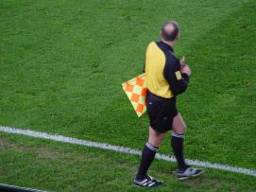
Today’s invention is a new rule for professional soccer.

On committing a yellow-card offence, players would be forced to swap positions with a randomly chosen team-mate (or even one chosen by the opposition captain, the player fouled or the opposition crowd).

That might have the effects of reducing player specialisation and cutting the frequency of rule-breaking by prima donna players.

#1295: LandingSight

I am paranoid about the safety performance of commercial airlines (despite their being statistically safer to travel with than driving to the airport).

If there is some kind of an emergency landing required, I’d really rather not have to rely on the pilot peering out the window in the hope of making a splashdown on a calm Hudson River.

Today’s invention is to provide pilots in an emergency situation with a visual display (based eg on Google Earth) which shows the real-time best landing site (taking into account fuel load, engine conditions, terrain flatness, population density and control systems integrity).

Flying over land, this would provide a moment-to-moment visualisation of where to put down.

In a real emergency, where flight crew were unconscious, this map could talk to the autopilot landing program and increase the chances of getting down in one piece. In a real disaster, it might help the plane to crash with minimal damage on the ground.

#1291: Shellmet

Today’s invention is a collapsible bicycle helmet.

It consists of an outer bag with hemispherical bulges moulded into it of different sizes.

Each bulge contains an aluminium boss bonded to a rubbery base. The bosses are of slightly different sizes so that they nest conveniently together when removed from the bag and fit into it for ease of carrying eg in a pocket.

The bosses’ rubber bases make contact with the wearer’s head and are held in place by a drawstring around the base of the bag.

In an accident, the bosses sustain damage and dissipate any impact loading across a wide area of the skull.