#379: Opinionbin

Manufacturers usually have to wait for their sales figures to appear before they can detect the success, or otherwise, of some product line.

Today’s invention allows information about the satisfaction of large numbers of real customers to be gathered. This aspect of marketing is sometimes forgotten in the rush to move on to the next shiny product…but what customers think post ownership is increasingly important in the race to build brands.

It consists of a waste bin equipped with a cameraphone. Items of packaging which were just about to be thrown away are briefly passed in front of the phone’s camera which can image their barcodes and allow the soon-to-be-former owner to express their satisfaction with their purchase in a variety of different ways (depending on how much time they have available and how incandescent with rage they have become).

Zdeslav_Schreiber_bin918.jpg

These expressions could start at the level of scrolling to click a happy or sad icon (a little like the wall units found in motorway toilets). It would also be possible to provide more information, if the user desired, about eg how easy the product had been to open or use and about the value obtained.

This would then all be communicated back to head office via the normal cellphone system. A server would interpret the barcode image and link the code to details of the product.

#378: Salient web

Whilst we wait for the arrival of the semantic web, it seems to me that search engines are not performing nearly as well as they might. When a web crawler examines a website, it can only form a very rudimentary view of what the important content actually is.

Today’s invention is a user generated salience measure.

melanie_kuipers_index928.jpg

Each time a webpage is loaded into a browser, a visitor would be asked, with a certain probability, whether they wanted to answer questions about the page (in return for entry into e.g. a prize draw).

If the response were positive, a user would be invited to click, in order, the five most important parts of the page (or the five most annoying ones).

These data would be stored over time, suitably encoded within the page itself. This would allow the possibility of automatically reconfiguring both the nature and structure of the content.

More importantly, the stored information would be read by crawlers visiting the page and used to help index its content more effectively (by weighting the words in the index according to the significance accorded them by users).

#377: Stripseats

It’s ridiculous really that people who have paid for tickets on public transport don’t get to sit down (especially on long journeys).

Today’s invention offers an alternative in the form of flexible plastic seats like those which sometimes appear in playparks by way of replacements for traditional heavy wooden ones.

jonathan_malm_swing934.jpg

There are almost always handholds on the shoulders of seats bordering the aisle in a bus or train. Using these, to each seat on one side of the aisle would be attached permanently a flexible, rubberised seat/strap unit, so that it hangs down beside the seat when not in use.

Once the seats fill up, rather than have to stand, people can grab the free end of the seat and attach it to the handhold on the seat on the opposite side of the aisle. This would be achieved using a robust, easy to use clip…which would support a passenger’s weight but disconnect easily when flicked upward (e.g. when evacuation is suddenly needed).

This arrangement would be no less safe, in the event of say a fire, than having to fight one’s way past numbers of standing passengers. Sitting down might well result in fewer injuries when some kind of collision occurs.

#376: Sidelongs

It’s widely believed that the (unusual) whites of people’s eyes may have evolved to enable other humans to work out what is being stared at. Meaningful glances can sometimes be socially instructive and much less overt than blurting out “Look at that!”

For anyone who needs to avoid people knowing exactly where they are looking, however, today’s invention aims to help; based on the above information.

eye.931png

A pair of contact lenses, one all-white, one with a fake iris and pupil, are overlapped, joined and placed in one eye.

The white lens covers and obscures the natural iris but can still be seen through (as can the other, false iris). This arrangement gives the impression that the wearer is looking eg left, when in fact she’s looking straight ahead.

This could be useful to security staff and surveillance agents who want to monitor suspects covertly. Obviously both eyes’ lenses need to be similarly orientated to avoid drawing attention to an unnatural squint.

#375: Readerbot

Young children seem to develop a strong attachment to certain storybooks.

It’s great to be able to calm them down at bedtime with a reassuringly familiar tale…although as a parent, reading the same book fifteen nights in a row (without being allowed to introduce any interesting characterisations to the narrative) can become a chore.

reading_hortongrou925.jpg

Today’s invention is a book cover which contains a small microphone and enough digital storage to record a version of every book in the house, being read by every grown-up family member.

The child recipients of these stories should still get cuddled during each performance, but parents can glaze over at the end of a hard day without having to actually say the words (again).

This would work particularly well as a memento of grandparents, after they are no longer around.

#374: Clearcuff

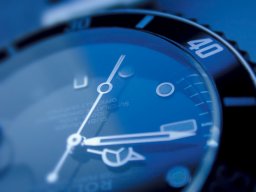
I find it maddening that when I want to consult my wristwatch, I have to hoist my shirt cuff out of the way.

For people who insist on wearing a chunky watch, it must be a burden to scrape the material across its surface numerous times a day. Add French cuffs and a pair of links and you can forget any attempt at chronometry.

Barry_Smith_watch923.jpg

Today’s invention is a straightforward solution. Shirts would be equipped with a small window in their left cuff, allowing the watch face to be conveniently viewed -without all the usual contortions.

#373: Quench control

Heat treatment and thermal control is important in creating the required properties of forged products. This allows relief of internal stresses and grain structure control, which provide improved material properties.

Now that thermography is a commonplace industrial technique, today’s invention is to use this to help control the local properties within forged components. This could be achieved by directing a jet of coolant gas to provide computer-controlled, spot cooling of the hot regions in a forged workpiece (it doesn’t have to use air, if you are concerned about oxidation).

Armin_Hanisch_forge921.jpg

This would allow greater certainty about the local rates of cooling and thus help to form components with varying properties in different regions. A bearing surface could be specially hardened, whilst leaving a defined level of elasticity in the shaft section of a single, multiproperty forging, for example.

This would certainly require very high speed, very narrow gas jets in order to achieve refined cooling within the body of a thick-section component.

#372: Toastector

There was a furore when people suddenly discovered that the ‘standby’ condition for electrical devices allowed them to continue drawing current when not in use and thus wasting energy. I’m therefore amazed that I haven’t been able to find any reference to the following idea (at least in the course of a quick patent and web search).

Toaster technology is still pretty primitive…mostly it’s a story of an overelaborate initial design being multiply updated with rigorous cost cutting at every stage of evolution (I’ll no doubt return to the subject of that ridiculous universal clamping system in due course). When you shove in fewer than the maximum number of slices allowed for a given design, all the heating elements fire up, full blast.

Kyle_Sorensen_toaster919.jpg

Today’s invention is a simple optical switch that can be fitted to existing toasters to allow them to sense which slots actually contain bread and to allow current to flow in the corresponding heating elements only.

This allows up to a 50% saving in the cost of running a toaster, over the course of its life.

#371: Rainbow drinks

Drinking a tumbler full of cocktail or smoothie can become a chore by the end -you can adapt pretty quickly to one taste so that it becomes cloying…wouldn’t it be great if drinks had an element of surprise?

Today’s invention is a way to liven drinks up.

cup914.png

A honeycomb material could be supplied to bars. It would be closed on one side, open on the other (forming vertical tubes, each wider than a drinking straw).

When a multicomponent drink is ordered, a section of this material could be cut off and inserted into the right size of glass.

The measures required to make the drink would be poured in, as usual, but distributed non-uniformly by hand across the tubes.

A straw would be used to drain each tube in turn -each of which would contain a different combination of components -providing a much more exciting tipple.

Each tube would contain a different coloured mixture as well -making for a more interesting visual experience too.

#370: Spoke springs

I once had a Yamaha motorcycle with wheel spokes which were curved (made of cast aluminium alloy). There was much tutting at the time, in the technical press, that this was an example of form over function.

In view of the fact that lots of today’s bicycles have several springs, swingarms and dampers embedded in their frames, why not just simplify things and use spokes which are inherently springy? Most conventional thinking about spokes says that they should be as rigid as possible; stiffening the wheel to ensure effective ‘feedback’ from the road surface (and limiting fatigue damage).

Charles_Toepfer_spokes911.jpg

But what if you want to be transported on a featherbed and don’t much care about performance? As long as the spokes are stiff in the wheel axle direction, they can stand to be pretty flexible radially. This would probably mean that the hub of the wheel remains slightly eccentric when in motion, but to anyone who has tried to ride over cobbles, springy spokes have got some obvious advantages.

I’d suggest making the spokes C-shaped in the plane of the wheel (allowing alternating tension and compression) and with an oval section with its long axis parallel to the wheel axle (to ensure the rim stays coplanar with the hub).